

Table of Contents
- Chronic Pain and Treatment Limitations
- What Is Stem Cell Therapy
- How Stem Cell Therapy Treats Chronic Pain
- Conditions Commonly Treated With Stem Cells
- Effectiveness and Clinical Outcomes
- Risks and Safety Considerations
- Cost of Stem Cell Therapy
- Key Features of Stem Cell Pain Treatment
- Who Is a Suitable Candidate
- Frequently Asked Questions
1. Chronic Pain and Treatment Limitations
Chronic pain affects millions worldwide and persists beyond normal healing timelines. Conventional treatments such as pain medication, steroid injections, and surgery often provide limited or temporary relief. Long-term drug use carries dependency risks, while invasive surgery introduces permanent structural changes. These limitations drive demand for regenerative approaches that address tissue damage rather than symptoms alone.
2. What Is Stem Cell Therapy
Stem cell therapy is a form of regenerative medicine that uses undifferentiated cells capable of repairing damaged tissue. In chronic pain treatment, stem cells are harvested from the patient’s bone marrow or adipose tissue and reintroduced into injured areas. The goal is to reduce inflammation, promote healing, and restore function at the cellular level.
3. How Stem Cell Therapy Treats Chronic Pain
Stem cells do not function as painkillers. Instead, they work by:
- Reducing inflammatory responses
- Stimulating tissue regeneration
- Enhancing blood supply to damaged areas
- Supporting repair of cartilage, ligaments, and tendons
Once injected, stem cells release growth factors that signal the body to repair damaged structures responsible for chronic pain.
4. Conditions Commonly Treated With Stem Cells
Stem cell therapy is frequently used for musculoskeletal and degenerative conditions, including:
- Osteoarthritis
- Degenerative disc disease
- Chronic back and neck pain
- Knee, hip, and shoulder joint damage
- Tendon and ligament injuries
- Sports-related overuse injuries
Effectiveness varies based on condition severity and tissue degeneration level.
5. Effectiveness and Clinical Outcomes
Clinical outcomes depend on patient selection and treatment protocol. Patients with mild to moderate degeneration experience the most benefit. Studies report reduced pain levels, improved mobility, and delayed need for surgery in many cases.
Stem cell therapy does not regenerate entire joints or reverse severe structural collapse. Outcomes are gradual, typically improving over weeks to months rather than immediately.
6. Risks and Safety Considerations
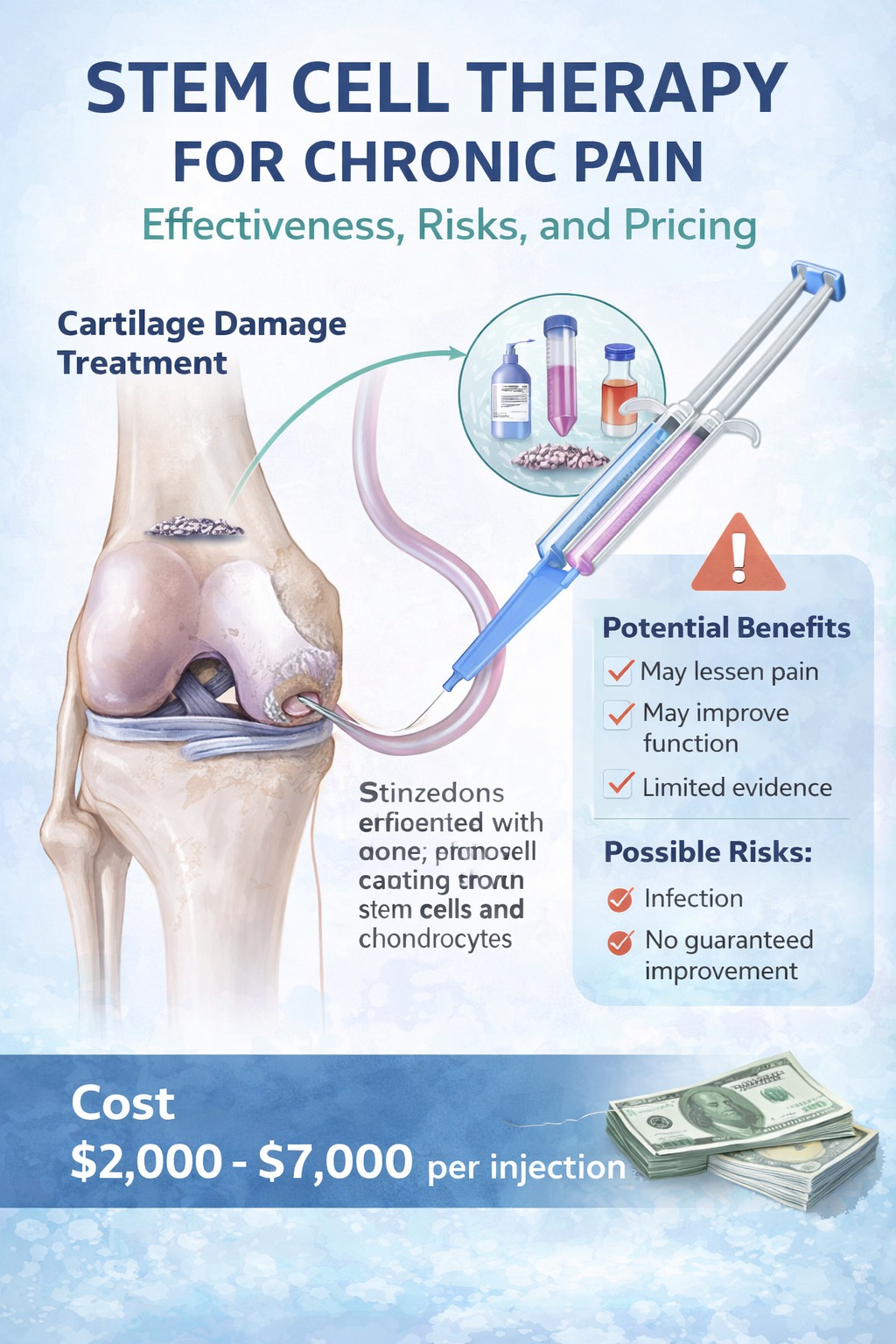
Stem cell therapy is generally considered low-risk when using autologous cells. However, risks include:
- Infection at injection site
- Temporary pain or swelling
- Inconsistent results
- Lack of response in advanced degeneration
Unregulated clinics and unproven stem cell sources significantly increase complication risk.
7. Cost of Stem Cell Therapy
Stem cell therapy is rarely covered by insurance and is considered an elective procedure.
Average pricing ranges:
- Single joint injection: $3,000–$7,000
- Spine-related treatment: $5,000–$15,000
- Multiple treatment areas: $10,000+
Costs vary based on cell source, processing methods, imaging guidance, and clinic expertise.
8. Key Features of Stem Cell Pain Treatment
Effective stem cell therapy programs include:
- Image-guided injection techniques
- Autologous stem cell sourcing
- Evidence-based treatment protocols
- Transparent outcome expectations
- Follow-up monitoring and rehabilitation integration
Absence of these features correlates with poor clinical results.
9. Who Is a Suitable Candidate
Ideal candidates typically have:
- Chronic pain unresponsive to conservative care
- Mild to moderate tissue degeneration
- No active infections or cancer
- Realistic expectations about outcomes
Patients with severe joint destruction or spinal instability are usually not candidates.
10. Frequently Asked Questions
Is stem cell therapy approved for chronic pain?
Many applications are considered investigational, though widely used in orthopedic and pain clinics.
How long do results last?
Relief may last months to years depending on condition progression and lifestyle factors.
Is stem cell therapy better than surgery?
It may delay or reduce the need for surgery in select patients but does not replace surgical intervention in advanced cases.
How soon does pain relief begin?
Improvement often begins within 4–12 weeks after treatment.
Why do results vary between patients?
Variability depends on age, injury severity, cell quality, and adherence to post-treatment protocols.








mark anthony
Positive info found very helpful for me