

Introduction
Wrongful death cases represent some of the most complex and emotionally difficult matters in civil law. These claims arise when a person dies due to the negligent, reckless, or intentional actions of another party. While criminal courts may address punishment for the responsible party, wrongful death lawsuits allow surviving family members to seek financial compensation for the losses they suffer after the death of a loved one.
One of the most challenging aspects of wrongful death litigation involves determining the financial value of a human life. Courts cannot truly measure the emotional and personal loss experienced by families, yet legal systems require some method for calculating damages. For this reason, legal researchers, economists, and courts rely on several analytical methods to estimate the monetary value of life lost in wrongful death cases.
These calculations do not attempt to place a literal price on a person’s existence. Instead, they focus on the economic and relational contributions the deceased individual would have likely provided to family members over time.
In modern litigation, wrongful death settlement values often depend on detailed financial analysis, expert testimony, and legal precedent. Researchers evaluate economic losses, non-economic damages, and future financial projections to determine fair compensation.
This article explores how wrongful death settlements are calculated, the role of legal researchers and economic experts, and the key factors that influence the valuation of loss of life in modern civil litigation.
Understanding Wrongful Death Law
Wrongful death claims arise when an individual dies due to the negligent actions or misconduct of another party. These cases commonly involve incidents such as:
- Car accidents
- Medical malpractice
- Workplace accidents
- Defective products
- Construction accidents
- Nursing home negligence
- Criminal violence
The purpose of wrongful death law is to provide financial support for surviving family members who relied on the deceased individual for emotional, financial, or household support.
In most jurisdictions, wrongful death claims may be filed by:
- Spouses
- Children
- Parents
- Legal dependents
- Estate representatives
Compensation obtained through these claims is intended to help families cope with the financial and emotional consequences of the loss.
The Concept of “Loss of Life” Value
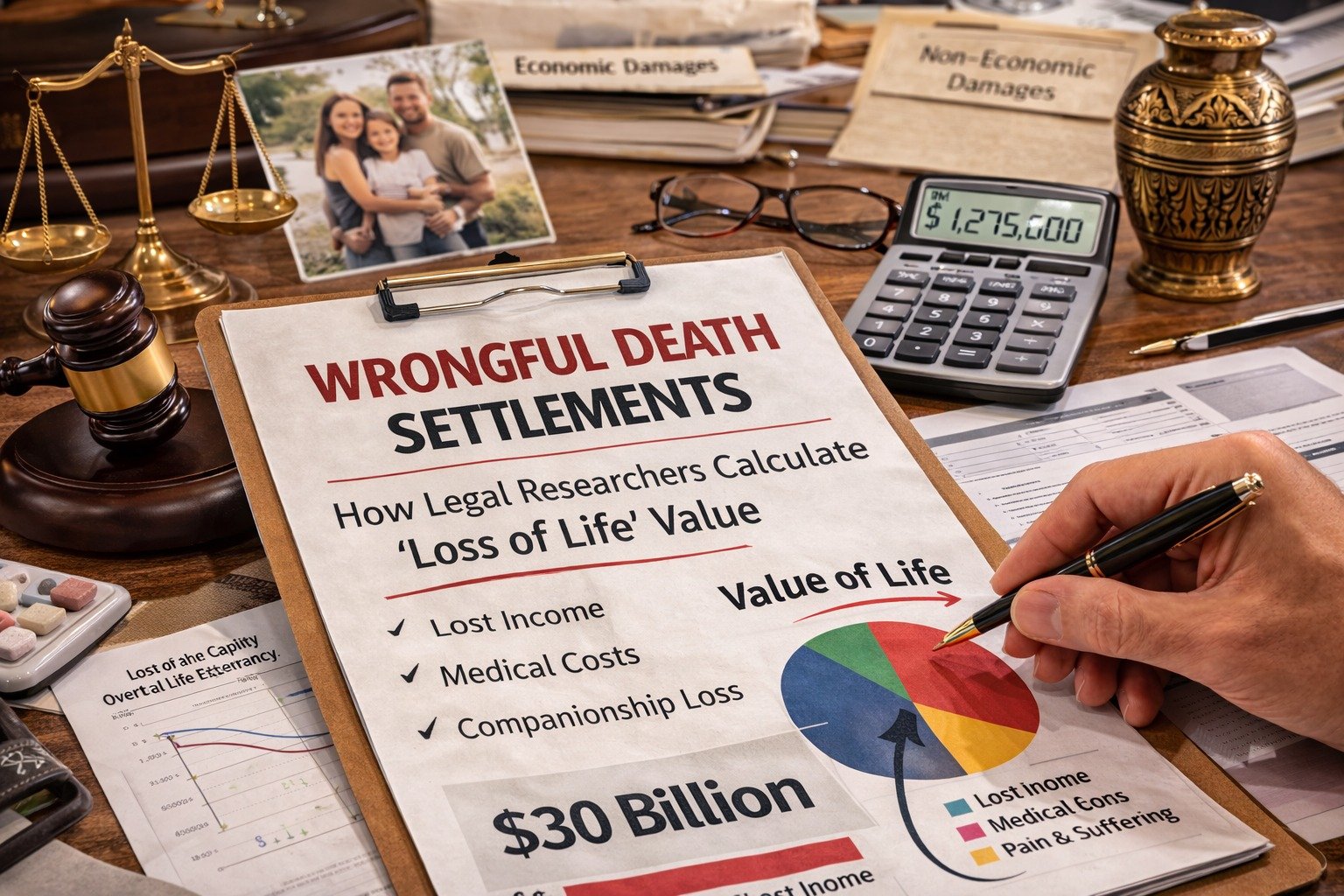
The concept of “loss of life” damages refers to the measurable economic and personal losses resulting from a person’s death. These damages often include both economic losses and non-economic losses.
Economic losses represent tangible financial contributions the deceased would have made. Non-economic losses refer to emotional and relational impacts experienced by surviving family members.
Legal researchers evaluate both categories to determine appropriate compensation.
Economic Damages in Wrongful Death Cases
Economic damages represent the financial contributions the deceased individual would have provided if they had lived.
These damages may include:
Lost Income
One of the most significant factors in wrongful death settlements is the projected income the deceased would have earned during their lifetime.
Researchers analyze:
- Current salary or wages
- Career advancement potential
- Expected raises and promotions
- Retirement age projections
Financial experts often calculate the total value of lost future earnings over the expected working life of the deceased.
Lost Benefits
Employment benefits can represent a substantial portion of an individual’s compensation. These may include:
- Health insurance
- Retirement contributions
- Pension benefits
- Bonuses
- Stock options
These benefits are included in economic loss calculations.
Household Services
Many individuals contribute unpaid labor to their households. Tasks such as childcare, cooking, maintenance, and home management have measurable economic value.
Legal researchers estimate the cost of replacing these services with paid assistance.
Medical Expenses Before Death
If the victim received medical treatment before passing away, those medical expenses may be included in the claim.
Funeral and Burial Costs
Funeral and burial expenses are commonly included in wrongful death settlements.
Non-Economic Damages
Non-economic damages compensate family members for emotional and relational losses that cannot be measured purely in financial terms.
These damages may include:
Loss of Companionship
Surviving family members may receive compensation for the loss of companionship, love, and emotional support.
Loss of Parental Guidance
Children who lose a parent may receive damages for the loss of guidance, education, and care.
Loss of Consortium
Spouses may seek compensation for the loss of marital companionship and intimacy.
Emotional Suffering
The psychological impact of losing a loved one can be significant, and courts may consider emotional distress in damage calculations.
Because these losses cannot be easily quantified, courts often rely on jury evaluation or settlement negotiations to determine appropriate compensation.
The Role of Economic Experts
Economic experts frequently play a central role in wrongful death litigation.
These specialists analyze financial data and create projections regarding future earnings and economic contributions.
Key elements of economic analysis include:
Life Expectancy Analysis
Experts review demographic data to estimate how long the deceased person would likely have lived.
Work Life Expectancy
Researchers estimate how many years the individual would have remained in the workforce.
Income Growth Projections
Future wage increases are estimated based on career trends, industry data, and historical income growth.
Present Value Calculations
Future earnings must be adjusted to their present value because money available today has greater economic value than money received in the future.
This adjustment ensures that compensation reflects the current equivalent of future losses.
Present Value and Future Earnings
Future income projections are often discounted to present value using financial models. This calculation accounts for factors such as inflation, investment returns, and economic growth.
By converting projected earnings into present value, courts can determine a fair lump-sum compensation amount.
This step ensures that the financial award accurately reflects long-term economic losses.
Factors That Influence Settlement Value
Several key factors influence wrongful death settlement amounts.
Age of the Deceased
Younger individuals often receive higher projected earnings calculations because they would have had more years in the workforce.
Education and Career Potential
Individuals with specialized training or professional careers may have higher projected income growth.
Number of Dependents
The financial needs of surviving dependents influence compensation levels.
Circumstances of the Death
Cases involving extreme negligence or misconduct may result in higher settlements.
Jurisdiction and Legal Precedent
Settlement values vary significantly depending on local laws and historical court decisions.
The Role of Legal Researchers
Legal researchers play a crucial role in wrongful death cases by analyzing previous court rulings and settlement patterns.
Their work includes:
- Reviewing case law involving similar circumstances
- Examining jury verdict reports
- Analyzing settlement databases
- Identifying trends in compensation amounts
These insights help attorneys evaluate the potential value of claims and guide settlement negotiations.
Settlement Negotiations in Wrongful Death Cases
Most wrongful death claims are resolved through settlement negotiations rather than jury trials.
During negotiations, attorneys present evidence supporting the value of the claim, including:
- Economic expert reports
- medical records
- employment documentation
- family impact statements
Insurance companies often conduct their own evaluations before offering settlement amounts.
If parties cannot reach an agreement, the case may proceed to trial.
Jury Awards in Wrongful Death Trials
In cases that proceed to trial, juries determine compensation based on evidence presented by both sides.
Jury verdicts can vary widely depending on factors such as:
- severity of negligence
- credibility of expert witnesses
- emotional impact of the case
- local legal standards
Some wrongful death jury verdicts have reached millions of dollars when significant economic losses or extreme negligence are involved.
Comparative Negligence Considerations
In certain cases, courts may determine that the deceased individual shared some responsibility for the incident.
If comparative negligence applies, the total compensation may be reduced according to the victim’s percentage of fault.
For example, if damages total $1,000,000 and the victim is found 20 percent responsible, the final award may be reduced to $800,000.
Insurance Coverage and Settlement Limits
Insurance policies often play a major role in wrongful death compensation.
Common insurance sources include:
- automobile liability insurance
- medical malpractice insurance
- employer liability coverage
- premises liability insurance
Policy limits may influence settlement negotiations because insurers typically pay damages up to the policy maximum.
The Emotional Complexity of Wrongful Death Cases
Beyond financial considerations, wrongful death cases involve profound emotional challenges for families.
Legal proceedings often require families to revisit painful events and discuss the personal impact of their loss.
Courts attempt to balance the need for fair compensation with the understanding that financial awards cannot fully replace a loved one.
The Future of Wrongful Death Damage Analysis
Legal research methods continue to evolve as technology and data analytics improve.
Future developments may include:
- advanced economic modeling
- improved life expectancy forecasting
- expanded legal databases for settlement comparisons
- artificial intelligence tools for legal research
These innovations may help courts and attorneys evaluate damages more accurately.
Conclusion
Wrongful death settlements represent a complex intersection of law, economics, and human experience. While no amount of money can replace a loved one, civil courts attempt to provide financial compensation that reflects the economic and emotional impact of the loss.
Legal researchers, economists, and attorneys play a crucial role in calculating the value of loss of life by analyzing income projections, financial contributions, and family relationships.
Through careful evaluation of both economic and non-economic damages, wrongful death claims aim to provide surviving families with financial stability and a measure of justice after a devastating loss.
As legal research methods continue to evolve, courts will continue refining how they assess the value of life in wrongful death litigation.







Leave a Reply