

Introduction
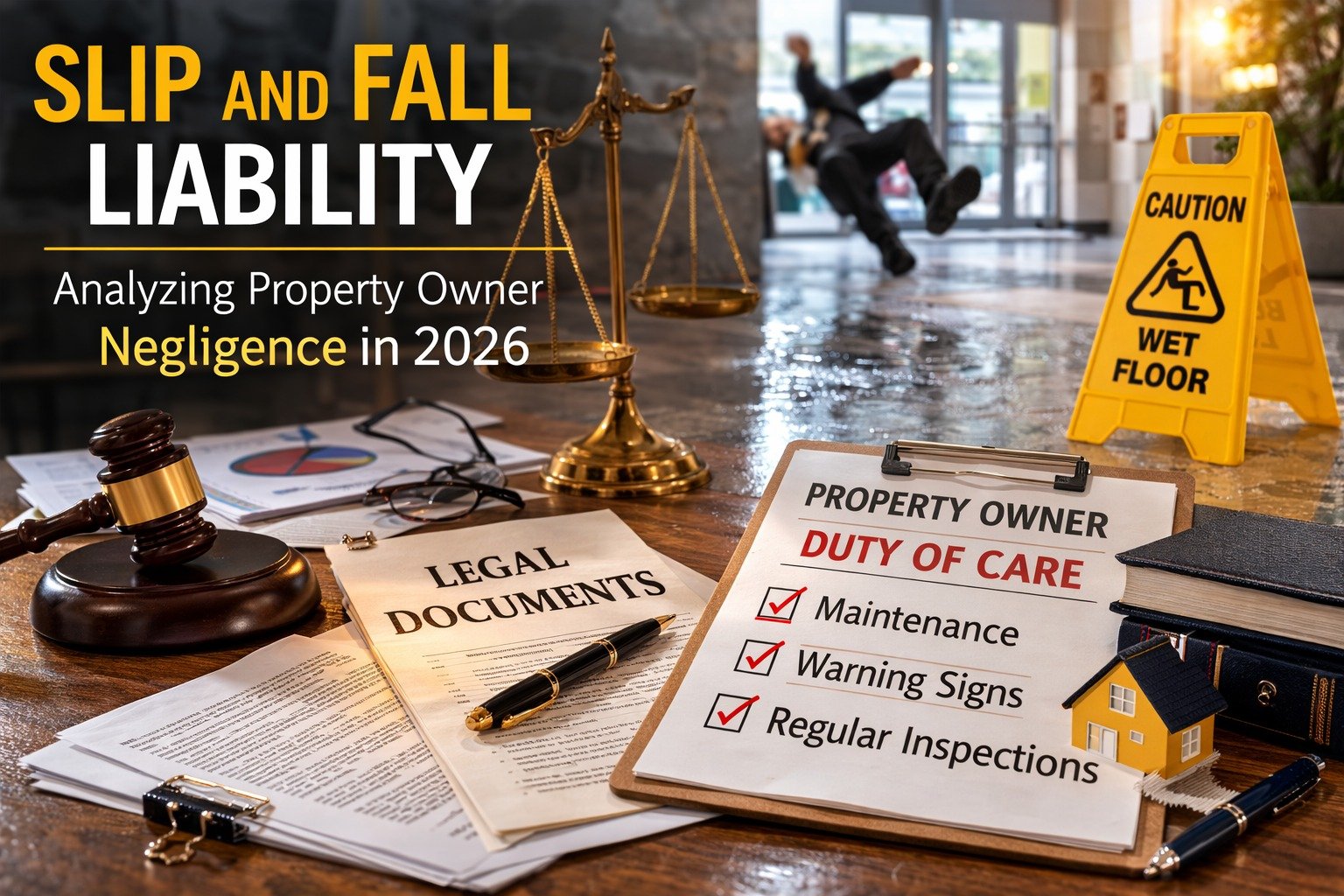
Slip and fall accidents remain one of the most common types of personal injury cases worldwide. Whether occurring in grocery stores, office buildings, shopping malls, apartment complexes, or public sidewalks, these incidents can cause serious injuries and significant legal disputes. In 2026, evolving safety regulations, surveillance technology, and legal standards have further shaped how courts evaluate slip and fall liability.
At the center of most slip and fall cases lies a critical legal question: Was the property owner negligent? Determining negligence requires examining whether the property owner failed to maintain reasonably safe conditions for visitors. If an unsafe condition existed and the owner did not take appropriate action to correct it or warn visitors, they may be held legally responsible for resulting injuries.
Slip and fall claims fall under a broader area of law known as premises liability, which governs the responsibilities property owners have toward people who enter their property. Premises liability law applies to various locations including commercial properties, private homes, government buildings, and public spaces.
Because slip and fall injuries can lead to costly medical bills, lost wages, and long-term disabilities, these cases often involve substantial financial claims. Understanding how courts analyze negligence, evidence, and liability is essential for anyone researching or pursuing a slip and fall case.
This article explores the legal framework surrounding slip and fall accidents, the responsibilities of property owners, the evidence required to prove negligence, and how these cases are evolving in 2026.
Understanding Premises Liability Law
Premises liability refers to the legal responsibility property owners and occupiers have to maintain safe environments for visitors. If a hazardous condition causes injury, the injured person may be entitled to compensation.
Property owners must take reasonable steps to prevent dangerous conditions that could cause harm. These responsibilities include:
- Maintaining safe walkways and floors
- Repairing structural hazards
- Cleaning spills or debris
- Providing adequate lighting
- Posting warning signs for temporary hazards
When property owners fail to meet these obligations, they may be considered negligent under premises liability law.
Common Causes of Slip and Fall Accidents
Slip and fall accidents can occur for many reasons, but most cases involve hazardous conditions that could have been prevented with proper maintenance.
Common causes include:
Wet or Slippery Floors
Spilled liquids, recently mopped floors, or water tracked indoors during rain can create dangerous walking surfaces.
Uneven Flooring
Cracked pavement, loose floor tiles, and damaged carpets often lead to trip-and-fall incidents.
Poor Lighting
Inadequate lighting can prevent visitors from noticing hazards such as steps, obstacles, or uneven surfaces.
Ice and Snow
In colder climates, property owners may be responsible for removing snow and ice from walkways within a reasonable time.
Obstructed Walkways
Boxes, cords, construction equipment, or other obstacles left in walking paths may create dangerous conditions.
Faulty Handrails or Stairs
Broken railings, uneven stair heights, or worn steps can increase the risk of falling.
Each of these hazards may form the basis of a negligence claim if the property owner failed to address them.
Elements Required to Prove Negligence
In slip and fall cases, injured individuals must generally prove several legal elements to establish liability.
Duty of Care
Property owners owe a duty of care to individuals who enter their property. This duty requires maintaining reasonably safe conditions and addressing known hazards.
Breach of Duty
The injured party must demonstrate that the property owner failed to meet their duty of care. This could involve neglecting maintenance, ignoring hazards, or failing to provide warnings.
Causation
The claimant must show that the hazardous condition directly caused the fall and resulting injuries.
Damages
Finally, the injured person must demonstrate measurable harm, such as medical expenses, lost income, or pain and suffering.
All four elements must typically be proven to succeed in a negligence claim.
Categories of Visitors in Premises Liability Law
Courts often evaluate property owner responsibilities based on the legal classification of the visitor.
Invitees
Invitees are individuals invited onto the property for business purposes, such as customers in a store or clients in an office. Property owners owe invitees the highest duty of care.
Licensees
Licensees enter property for non-commercial reasons, such as social guests. Owners must warn licensees about known hazards but may not be required to inspect for unknown dangers.
Trespassers
Trespassers enter property without permission. Property owners generally owe limited duties to trespassers but must avoid intentionally causing harm.
Understanding visitor classification can significantly affect the outcome of a slip and fall case.
Evidence Used in Slip and Fall Claims
Proving negligence often requires strong supporting evidence. Common types of evidence include:
Surveillance Footage
Security cameras in stores, office buildings, and public spaces frequently capture accident scenes. Video evidence can reveal how long a hazard existed and whether staff addressed it.
Incident Reports
Many businesses require employees to document accidents. These reports can provide important details about the conditions present during the fall.
Witness Statements
Eyewitness accounts may confirm the existence of hazardous conditions or describe how the accident occurred.
Photographs
Photos taken at the accident scene can preserve evidence of hazards before they are repaired.
Medical Records
Medical documentation helps demonstrate the severity and cause of injuries.
Together, these forms of evidence help courts determine whether negligence occurred.
Comparative Negligence in Slip and Fall Cases
In many jurisdictions, courts apply comparative negligence rules when evaluating slip and fall claims. This means that if the injured person contributed to the accident, their compensation may be reduced.
For example, a court may find that:
- The property owner was 80 percent responsible
- The injured individual was 20 percent responsible
If the total damages were $100,000, the injured person might receive $80,000 after accounting for their share of responsibility.
Comparative negligence ensures that liability is distributed fairly based on each party’s role in the incident.
The Role of Property Inspections
Regular property inspections play an important role in preventing slip and fall accidents.
Property owners often conduct inspections to identify hazards such as:
- Wet floors
- Structural damage
- Broken lighting
- Obstructed walkways
Failure to perform routine inspections may strengthen negligence claims if dangerous conditions remain unaddressed.
Insurance and Slip and Fall Claims
Many property owners carry liability insurance to protect against personal injury claims. When a slip and fall accident occurs, insurance companies often become involved in the investigation and settlement process.
Insurance adjusters may review:
- Surveillance footage
- Maintenance records
- Medical documentation
- Witness statements
Insurance companies sometimes attempt to minimize payouts by arguing that the property owner was not negligent or that the injuries were exaggerated.
For this reason, claimants often seek legal representation when pursuing compensation.
Injuries Commonly Associated with Slip and Fall Accidents
Slip and fall incidents can lead to a wide range of injuries, some of which may have long-term consequences.
Common injuries include:
- Broken bones
- Head trauma or concussions
- Spinal cord injuries
- Hip fractures
- Soft tissue damage
- Knee injuries
- Chronic back pain
Older adults are particularly vulnerable to severe injuries such as hip fractures, which can require extensive medical treatment.
Financial Impact of Slip and Fall Injuries
The financial consequences of slip and fall accidents can be substantial. Victims may face costs such as:
- Emergency medical treatment
- Hospitalization
- Physical therapy
- Prescription medications
- Lost wages
- Reduced earning capacity
In severe cases, individuals may also seek compensation for pain, suffering, and reduced quality of life.
Preventative Measures for Property Owners
Preventing slip and fall accidents requires proactive safety measures. Property owners can reduce risks by:
- Installing non-slip flooring
- Maintaining proper lighting
- Conducting routine inspections
- Removing debris promptly
- Installing handrails on staircases
- Posting warning signs near hazards
Implementing these precautions can help reduce legal exposure and protect visitors.
Technology and Slip and Fall Liability in 2026
Technological advancements are increasingly influencing how courts evaluate premises liability cases.
Smart Surveillance Systems
High-resolution security cameras can document incidents with precise timestamps.
AI-Based Safety Monitoring
Some buildings now use artificial intelligence systems to detect spills or obstacles automatically.
Digital Maintenance Logs
Electronic records help track property inspections and maintenance activities.
These technologies may provide valuable evidence in modern slip and fall litigation.
Legal Trends in Slip and Fall Cases
Several trends are shaping slip and fall claims in 2026.
Increased Surveillance Evidence
Video footage plays a growing role in determining liability.
Greater Emphasis on Preventative Measures
Courts increasingly examine whether property owners implemented reasonable safety practices.
Rising Medical Costs
Higher healthcare expenses may increase settlement values for serious injuries.
Expanded Accessibility Laws
Regulations designed to improve accessibility for disabled individuals also influence premises liability standards.
These trends reflect the evolving nature of personal injury law.
Researching Slip and Fall Settlements
Individuals researching slip and fall cases often review publicly available legal resources such as:
- Court rulings
- Settlement reports
- Legal databases
- Insurance claim statistics
These sources provide insight into typical compensation amounts and how courts evaluate negligence.
However, each case is unique, and outcomes depend heavily on specific circumstances.
Conclusion
Slip and fall accidents continue to represent a significant category of personal injury claims in 2026. Determining liability in these cases requires careful analysis of property owner responsibilities, hazardous conditions, and available evidence.
Premises liability law places a duty on property owners to maintain safe environments and address hazards that could cause harm. When owners fail to fulfill this duty, injured individuals may pursue compensation for medical expenses, lost income, and other damages.
As surveillance technology, safety standards, and legal frameworks evolve, the process of analyzing property owner negligence continues to become more sophisticated.
Understanding how slip and fall liability works can help injured individuals, property owners, and legal professionals navigate these complex cases while promoting safer environments for everyone.







Leave a Reply