

Introduction
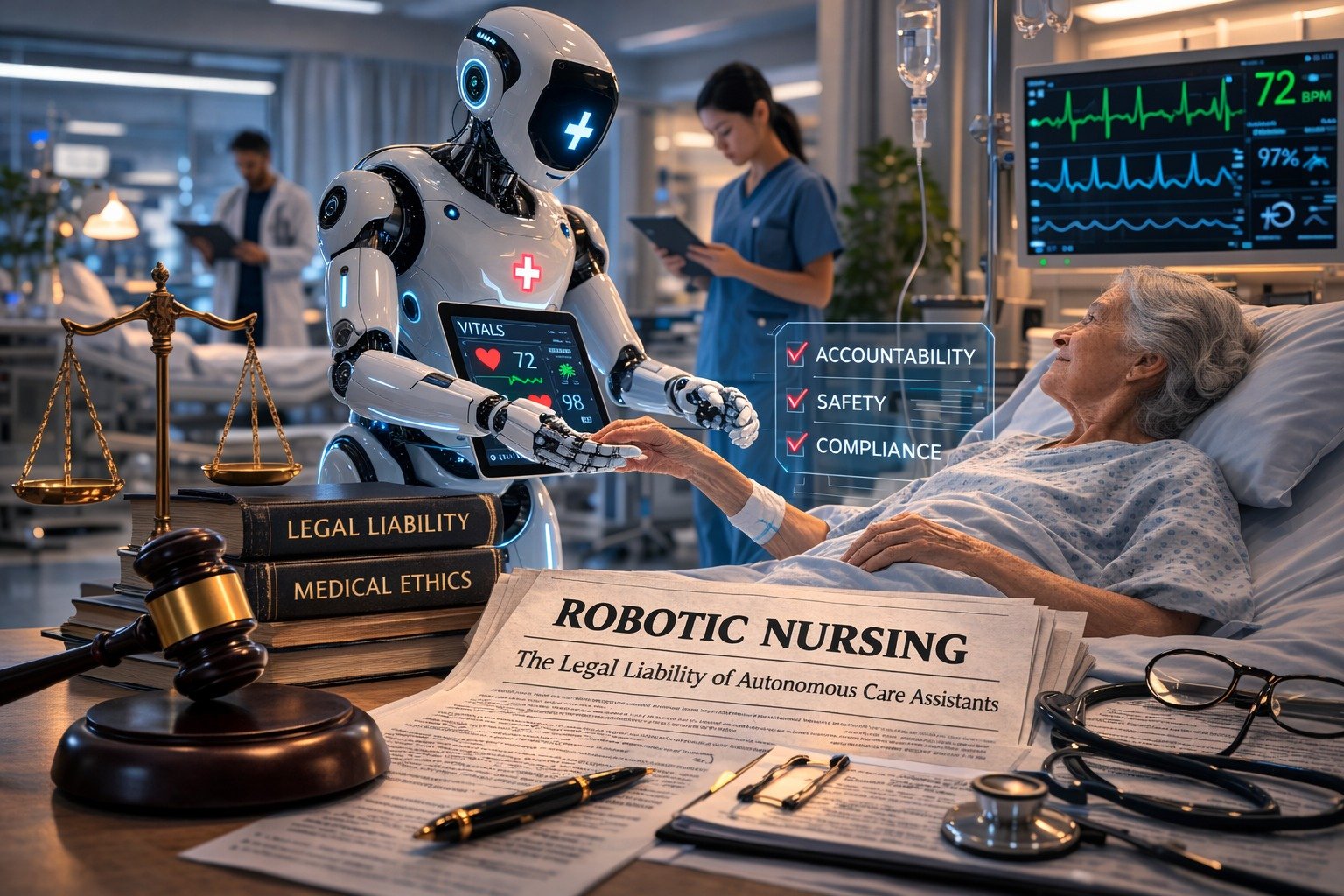
Healthcare systems around the world are facing increasing pressure. Aging populations, rising healthcare costs, and shortages of trained medical professionals have created a growing demand for innovative solutions. Among the technologies emerging to address these challenges are autonomous care robots, sometimes referred to as robotic nurses or robotic care assistants.
These intelligent machines are designed to assist healthcare workers with tasks ranging from monitoring patients to delivering medications and supporting rehabilitation. Hospitals, nursing homes, and home healthcare providers are increasingly exploring robotic nursing technologies as a way to improve efficiency and expand patient care capacity.
However, the integration of autonomous robots into healthcare environments raises complex legal questions. If a robotic nurse makes a mistake that harms a patient, who is legally responsible? Is liability assigned to the hospital, the robot manufacturer, the software developer, or the medical staff supervising the system?
As artificial intelligence and robotics become more deeply integrated into patient care, legal systems must adapt to address these new forms of medical liability. This article explores the legal, ethical, and regulatory challenges surrounding robotic nursing and examines how liability frameworks may evolve as autonomous healthcare technologies become more widespread.
The Rise of Robotic Nursing Technology
Robotic technology has been used in healthcare for several decades, particularly in surgical environments. However, advances in artificial intelligence, machine learning, and sensor technology have expanded the capabilities of healthcare robots beyond the operating room.
Modern robotic care assistants can perform a variety of tasks, including:
- Monitoring patient vital signs
- Delivering medications and supplies
- Assisting with patient mobility
- Providing reminders for medication schedules
- Supporting rehabilitation exercises
- Collecting healthcare data
Some robots are also designed to interact socially with patients, offering companionship and emotional support, particularly in elderly care environments.
These systems are typically powered by artificial intelligence algorithms that allow robots to navigate environments, interpret sensor data, and respond to patient needs.
Types of Robotic Care Assistants
Robotic nursing technologies can be categorized into several types depending on their functions.
Service Robots
Service robots assist healthcare staff with logistical tasks such as transporting medications, linens, and medical equipment within hospitals.
Patient Monitoring Robots
These robots use sensors and cameras to monitor patients, track vital signs, and alert healthcare providers when abnormalities are detected.
Rehabilitation Robots
Rehabilitation robots help patients perform physical therapy exercises and track progress during recovery.
Social Companion Robots
Companion robots provide emotional support and cognitive stimulation for elderly patients or individuals with dementia.
Each category of robotic nursing technology introduces unique legal considerations related to safety and responsibility.
Benefits of Robotic Nursing
The adoption of robotic nursing systems offers several potential benefits for healthcare institutions.
Addressing Workforce Shortages
Many countries face shortages of trained nurses and caregivers. Robots can help fill gaps by assisting with routine tasks.
Improving Efficiency
Robots can handle repetitive logistical duties, allowing nurses to focus on more complex patient care responsibilities.
Enhancing Patient Monitoring
Continuous monitoring systems can detect health changes earlier than periodic manual checks.
Reducing Physical Strain
Robots can assist with lifting or moving patients, reducing the risk of injury among healthcare workers.
These advantages make robotic nursing technologies attractive solutions for healthcare providers facing increasing operational pressures.
The Legal Concept of Medical Liability
Medical liability refers to the legal responsibility of healthcare providers for harm caused by negligence or failure to meet professional standards.
In traditional healthcare settings, liability typically falls on:
- Physicians
- Nurses
- Hospitals or healthcare institutions
- Medical device manufacturers
Medical malpractice lawsuits often arise when patients claim that a healthcare provider acted negligently or failed to provide an appropriate standard of care.
However, autonomous robots complicate these traditional liability structures.
The Challenge of Autonomous Decision-Making
Autonomous robotic systems are capable of making decisions without direct human control. These decisions are often based on algorithms that analyze data and determine appropriate actions.
For example, a robotic care assistant might:
- Decide when to alert medical staff about abnormal vital signs
- Recommend medication reminders
- Adjust rehabilitation exercises based on patient performance
If such a system makes an incorrect decision that leads to patient harm, determining liability becomes complicated.
Unlike human caregivers, robots cannot be held legally responsible for their actions.
Instead, legal systems must identify which human or organizational entity should bear responsibility.
Potential Liability Parties
Several parties could potentially be held liable when robotic nursing systems cause harm.
Healthcare Institutions
Hospitals and care facilities that deploy robotic systems may be responsible for ensuring that the technology is used safely and appropriately.
Failure to properly train staff or maintain robotic systems could expose institutions to legal liability.
Robot Manufacturers
Manufacturers may be liable if a robotic system contains design defects, hardware failures, or safety flaws.
Product liability laws often apply when defective devices cause injuries.
Software Developers
AI-driven robots rely heavily on software algorithms. If programming errors or flawed algorithms lead to harmful outcomes, software developers may face legal scrutiny.
Healthcare Professionals
Medical staff supervising robotic systems may also bear responsibility if they fail to properly monitor the technology or intervene when necessary.
The complexity of these relationships makes legal accountability difficult to determine.
Product Liability and Medical Robotics
Product liability law is likely to play a major role in regulating robotic nursing technologies.
Under product liability principles, manufacturers may be responsible if a product is found to be:
- Defectively designed
- Improperly manufactured
- Sold without adequate warnings or instructions
If a robotic care assistant malfunctions due to hardware defects or unsafe design, the manufacturer could be held liable for resulting injuries.
However, determining liability becomes more complicated when AI systems evolve over time through machine learning.
The Role of Artificial Intelligence in Robotic Nursing
Artificial intelligence is a key component of modern robotic nursing systems. AI algorithms allow robots to process data, recognize patterns, and adapt to new situations.
For example, AI systems may analyze patient movement patterns to detect falls or monitor vital sign trends to predict medical emergencies.
While AI enhances the capabilities of robotic nurses, it also introduces legal uncertainty.
AI systems often operate as “black boxes,” meaning their decision-making processes may not be fully transparent.
This lack of transparency raises questions about how courts can evaluate whether an AI system acted negligently.
Regulatory Frameworks for Healthcare Robots
Government agencies are beginning to develop regulatory frameworks for medical robotics.
Many healthcare robots are regulated as medical devices, meaning they must undergo safety evaluations before being approved for use.
Regulatory agencies may assess factors such as:
- Device safety and reliability
- Software functionality
- Risk management systems
- Human oversight mechanisms
These evaluations help ensure that robotic systems meet basic safety standards before entering healthcare environments.
However, existing regulations may not fully address the complexities of autonomous systems.
Ethical Issues in Robotic Nursing
Beyond legal liability, robotic nursing raises important ethical questions.
Human Oversight
Many experts argue that robotic systems should always operate under human supervision to ensure patient safety.
Patient Trust
Patients may feel uncomfortable receiving care from machines rather than human caregivers.
Privacy Concerns
Robotic monitoring systems often collect large amounts of patient data, raising privacy and data protection issues.
Equity in Healthcare
Advanced robotic systems may initially be expensive, raising concerns about unequal access to technology.
Addressing these ethical concerns will be essential for responsible adoption of robotic healthcare technologies.
Insurance and Risk Management
Healthcare providers adopting robotic nursing systems must also consider insurance implications.
Medical malpractice insurance policies may need to be updated to account for risks associated with autonomous technology.
Insurance companies may require hospitals to demonstrate:
- Staff training for robotic systems
- Safety protocols for autonomous devices
- Maintenance and monitoring procedures
These requirements could influence how healthcare institutions integrate robotic technologies into clinical practice.
The Future of Robotic Nursing Liability
Legal systems around the world are still adapting to the rapid development of autonomous technologies.
Future legal frameworks may introduce new approaches to liability, such as:
Shared Liability Models
Responsibility may be distributed among manufacturers, healthcare institutions, and software developers.
Mandatory Safety Standards
Governments may establish stricter safety regulations for autonomous medical devices.
AI Accountability Laws
New laws could require transparency in AI decision-making processes.
Certification Programs
Robotic nursing systems may require certification similar to that used for pharmaceuticals or medical devices.
These developments will shape the future legal landscape for robotic healthcare technologies.
The Role of Robotics in the Future of Healthcare
Despite legal and ethical challenges, robotic nursing technologies are expected to play an increasingly important role in healthcare.
Advances in robotics, artificial intelligence, and sensor technology will continue to improve the capabilities of autonomous care assistants.
These systems may eventually support a wide range of healthcare activities, from hospital care to home-based medical monitoring.
By assisting healthcare workers and enhancing patient monitoring, robotic nursing technologies have the potential to improve healthcare outcomes while reducing workload pressures on medical staff.
Conclusion
Robotic nursing represents one of the most significant technological developments in modern healthcare. Autonomous care assistants can help address workforce shortages, improve patient monitoring, and enhance healthcare efficiency.
However, the integration of robots into patient care introduces complex legal questions about liability and accountability. When autonomous systems make decisions that affect patient health, determining responsibility for errors becomes far more complicated than in traditional healthcare settings.
As robotic technologies continue to evolve, legal systems must develop new frameworks that balance innovation with patient safety. Clear liability rules, strong regulatory oversight, and ethical guidelines will be essential for ensuring that robotic nursing technologies are used responsibly.
Ultimately, the goal of robotic nursing should not be to replace human caregivers but to support them. When properly designed and regulated, autonomous care assistants can become valuable tools that enhance healthcare delivery while maintaining the highest standards of patient safety.














Leave a Reply