

Introduction
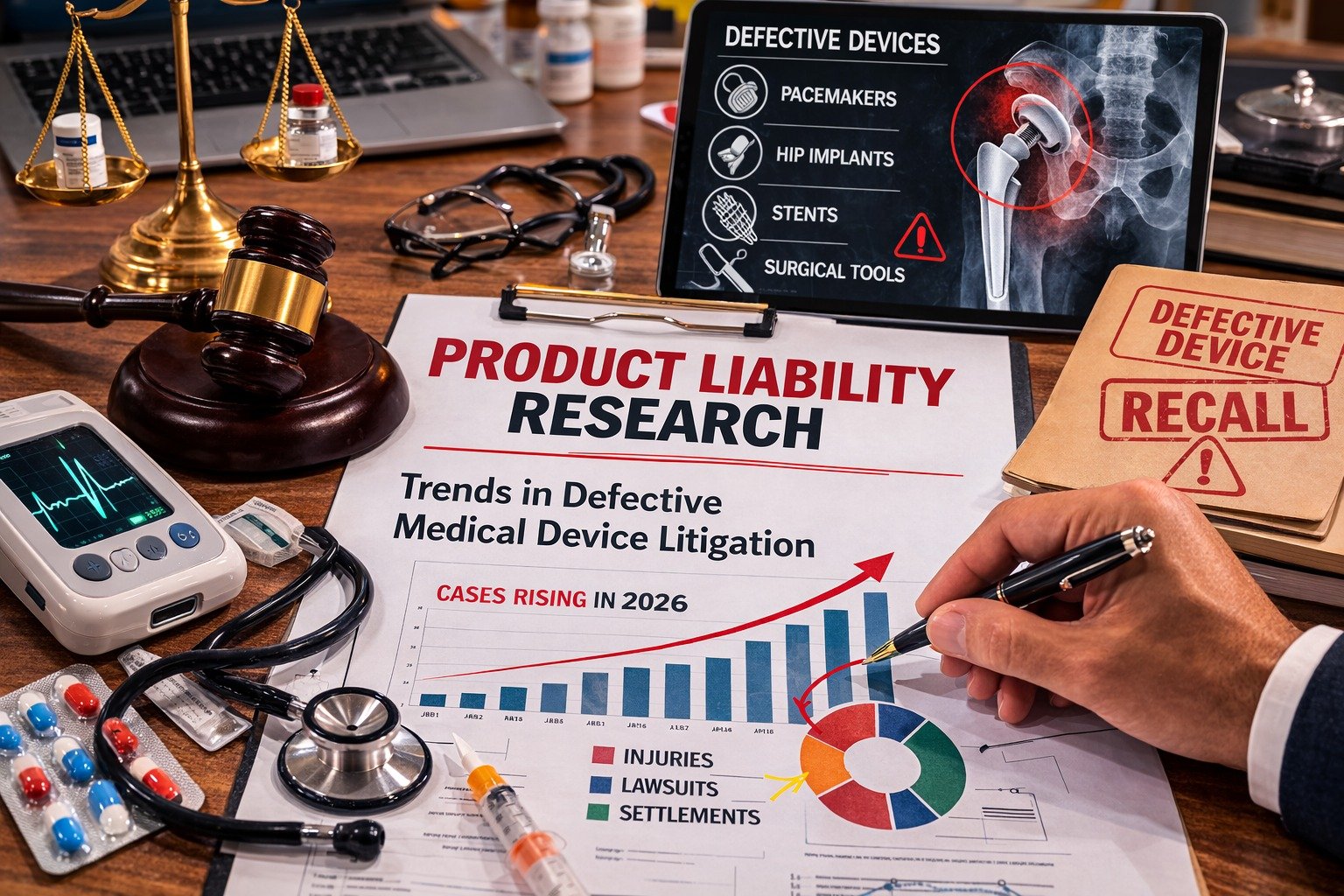
Medical technology has transformed modern healthcare. From artificial joints and cardiac implants to surgical robots and diagnostic tools, medical devices have improved the quality of life for millions of patients. However, when these devices fail or contain hidden defects, the consequences can be severe. Injuries caused by defective medical devices have led to a growing number of product liability lawsuits across the world.
Product liability law allows injured individuals to seek compensation when a dangerous or defective product causes harm. In the healthcare sector, defective medical device litigation has become one of the most complex and high-stakes areas of civil litigation. Lawsuits often involve multiple parties including manufacturers, distributors, hospitals, and regulatory agencies.
In recent years, the legal landscape surrounding defective medical devices has evolved rapidly. Advances in biotechnology, artificial intelligence, and digital health systems have created new legal challenges related to device safety, regulatory oversight, and manufacturer responsibility.
This article examines the legal principles governing medical device product liability claims and explores emerging litigation trends shaping defective medical device lawsuits in the modern era.
Understanding Medical Device Product Liability
Product liability refers to the legal responsibility manufacturers and distributors have when their products cause harm. In the context of medical devices, liability may arise if a device contains defects that make it unsafe for patients.
Medical devices include a wide range of healthcare products such as:
- Artificial joints and orthopedic implants
- Pacemakers and heart valves
- Surgical mesh and stents
- Insulin pumps and glucose monitors
- Diagnostic imaging equipment
- Surgical instruments and robotic systems
If these devices malfunction, patients may suffer severe injuries requiring additional medical treatment, surgery, or long-term care.
Product liability claims involving medical devices typically fall into three categories:
Design Defects
A design defect occurs when the device is inherently unsafe due to flaws in its engineering or structure. Even if manufactured correctly, the device may still pose unreasonable risks to patients.
Manufacturing Defects
Manufacturing defects occur when errors during production create a faulty product that differs from the intended design.
Failure to Warn
Manufacturers must provide adequate warnings and instructions about potential risks. If they fail to disclose known dangers, they may be liable for resulting injuries.
Individuals injured by defective devices may file lawsuits seeking compensation for damages.
The Role of Regulatory Oversight
Government regulatory agencies play a central role in overseeing medical device safety.
In the United States, the Food and Drug Administration (FDA) regulates medical devices through several approval pathways. One of the most widely used systems is the 510(k) clearance process, which allows devices to enter the market if they are substantially equivalent to previously approved products. Critics argue that this pathway may allow devices to reach patients without extensive clinical testing, contributing to higher recall risks. (arXiv)
Medical device regulations typically require manufacturers to:
- Conduct safety testing
- Submit regulatory approval applications
- Monitor device performance after approval
- Report adverse events and malfunctions
Despite these safeguards, defective devices occasionally reach the market, leading to litigation when injuries occur.
The Rise of Medical Device Litigation
Medical device product liability cases have increased significantly over the past decade. Legal data shows thousands of product liability lawsuits filed in federal courts each year, with medical device cases representing a notable share of these claims. (LexisNexis)
Several factors have contributed to the growth of defective medical device litigation:
Rapid Medical Technology Innovation
Advances in biotechnology and digital health have introduced complex devices that combine software, electronics, and mechanical components.
Increased Device Recalls
When safety issues emerge, large product recalls often trigger waves of lawsuits from injured patients.
Growing Awareness Among Patients
Public access to information about medical device risks has increased through online resources and media coverage.
Expansion of Mass Tort Litigation
Large groups of plaintiffs often file lawsuits together when many individuals suffer injuries from the same device.
These developments have transformed medical device litigation into a major sector of product liability law.
Mass Tort Litigation and Multidistrict Cases
Many defective medical device lawsuits are handled through mass tort litigation, where numerous individual cases are consolidated for efficiency.
Courts often use multidistrict litigation (MDL) procedures to manage large numbers of similar claims. In MDL cases:
- Lawsuits from multiple jurisdictions are transferred to a single federal court.
- Pretrial discovery and evidence gathering are centralized.
- Cases may later return to their original courts for trial if settlements are not reached.
Mass tort litigation allows courts to address complex scientific evidence and corporate documentation more efficiently.
High-Profile Medical Device Lawsuits
Several well-known defective medical device cases have shaped modern product liability law.
Examples include litigation involving:
- Metal-on-metal hip implants
- Transvaginal surgical mesh
- Inferior vena cava (IVC) filters
- Defective pacemakers and defibrillators
- Hernia mesh implants
These cases often involve thousands of plaintiffs alleging serious injuries caused by device failures.
For example, litigation involving surgical mesh implants has produced tens of thousands of claims and billions of dollars in settlement reserves by manufacturers responding to injury allegations. (Reuters)
Such cases demonstrate the significant financial stakes involved in defective medical device litigation.
Emerging Technology and New Liability Risks
As medical technology evolves, new legal risks are emerging in the healthcare industry.
Artificial Intelligence in Medical Devices
AI-powered medical devices are increasingly used in surgical planning, diagnostic imaging, and patient monitoring. However, software errors or algorithmic miscalculations can lead to serious consequences.
Reports have documented incidents where AI-assisted surgical tools misidentified anatomical structures, allegedly contributing to patient injuries. (Reuters)
These developments raise questions about how courts should assign liability when software-driven devices malfunction.
Smart Implants and Connected Devices
Many modern medical devices are connected to digital networks and cloud-based monitoring systems. While this connectivity improves patient care, it also introduces cybersecurity risks.
If hackers compromise a medical device or its software, determining liability may become complicated.
Software as a Medical Device (SaMD)
Digital health applications that function as medical tools are also subject to product liability laws. Errors in medical algorithms may potentially expose developers to litigation.
Key Legal Doctrines in Medical Device Litigation
Courts rely on several legal doctrines when evaluating defective medical device claims.
The Learned Intermediary Doctrine
This principle states that manufacturers satisfy their duty to warn by informing healthcare professionals about device risks. Physicians then act as intermediaries who advise patients.
Recent court decisions have continued to refine how this doctrine applies in failure-to-warn claims involving medical devices. (Faegre Drinker)
Strict Liability
Under strict liability rules, manufacturers may be held responsible for defective products regardless of negligence.
Negligence
Plaintiffs may also claim that manufacturers failed to exercise reasonable care during design, testing, or production.
Breach of Warranty
In some cases, companies may be liable if a product fails to meet safety or performance guarantees.
Evidence in Defective Medical Device Cases
Medical device litigation often requires extensive scientific and technical evidence.
Key forms of evidence include:
- Clinical trial data
- Engineering analyses
- Medical expert testimony
- Regulatory filings
- Internal company documents
- Device recall notices
Expert witnesses frequently play a central role in explaining complex medical and engineering issues to courts and juries.
The Financial Impact of Medical Device Litigation
Defective medical device lawsuits often involve significant financial damages.
Compensation may include:
- Medical expenses
- Future treatment costs
- Lost income
- Pain and suffering
- Disability compensation
In some cases, courts may award punitive damages if manufacturers knowingly concealed safety risks.
Large jury verdicts, sometimes referred to as nuclear verdicts, can reach tens of millions of dollars in serious product liability cases. (JD Supra)
These high-value claims have significant implications for manufacturers and insurers.
The Role of Recalls in Litigation
Medical device recalls often trigger product liability lawsuits.
A recall occurs when a manufacturer or regulator determines that a device may pose safety risks.
Recalls may result from:
- Design flaws
- Manufacturing errors
- Software defects
- Packaging failures
For example, hundreds of thousands of knee implants were recalled after packaging defects were discovered, leading to thousands of injury lawsuits. (The Guardian)
Although recalls do not automatically prove liability, they may strengthen claims that a device was defective.
Bankruptcy and Corporate Liability
In some cases, companies facing massive litigation liabilities may file for bankruptcy protection.
Bankruptcy proceedings can complicate lawsuits by:
- Delaying claims
- Limiting compensation funds
- Consolidating cases into settlement trusts
These legal strategies have become increasingly controversial in mass tort litigation involving medical products.
Global Trends in Medical Device Litigation
Defective medical device litigation is not limited to one country. Global legal systems are increasingly addressing product safety issues.
Key global trends include:
- Increased consumer protection laws
- Expansion of class action lawsuits
- Stricter regulatory oversight
- Cross-border litigation involving multinational companies
Legal frameworks continue to evolve as healthcare technologies become more sophisticated.
The Future of Medical Device Product Liability
Several developments are expected to shape medical device litigation in the coming years.
Enhanced Regulatory Oversight
Regulators may introduce stricter safety testing requirements for emerging technologies.
Greater Transparency in Safety Reporting
Government agencies are increasingly publishing adverse event reports related to medical devices.
Artificial Intelligence Liability Standards
Courts may develop new legal frameworks to address injuries caused by AI-driven medical devices.
Expansion of Litigation Funding
Third-party litigation financing is making it easier for plaintiffs to pursue complex product liability cases.
These trends will likely influence how defective medical device lawsuits evolve in the future.
Conclusion
Defective medical device litigation represents one of the most complex areas of modern product liability law. As medical technologies become more advanced, the legal system must adapt to address new safety risks and accountability challenges.
Patients rely on medical devices to improve their health and quality of life. When these devices fail, the consequences can be devastating. Product liability lawsuits serve an important role in holding manufacturers accountable, compensating injured individuals, and encouraging higher safety standards in medical innovation.
Understanding the legal principles behind defective medical device litigation helps researchers, legal professionals, and consumers better navigate this rapidly evolving field.
As healthcare technology continues to advance, the intersection of medicine, engineering, and law will remain a critical area of legal research and public policy.









Leave a Reply