

Introduction
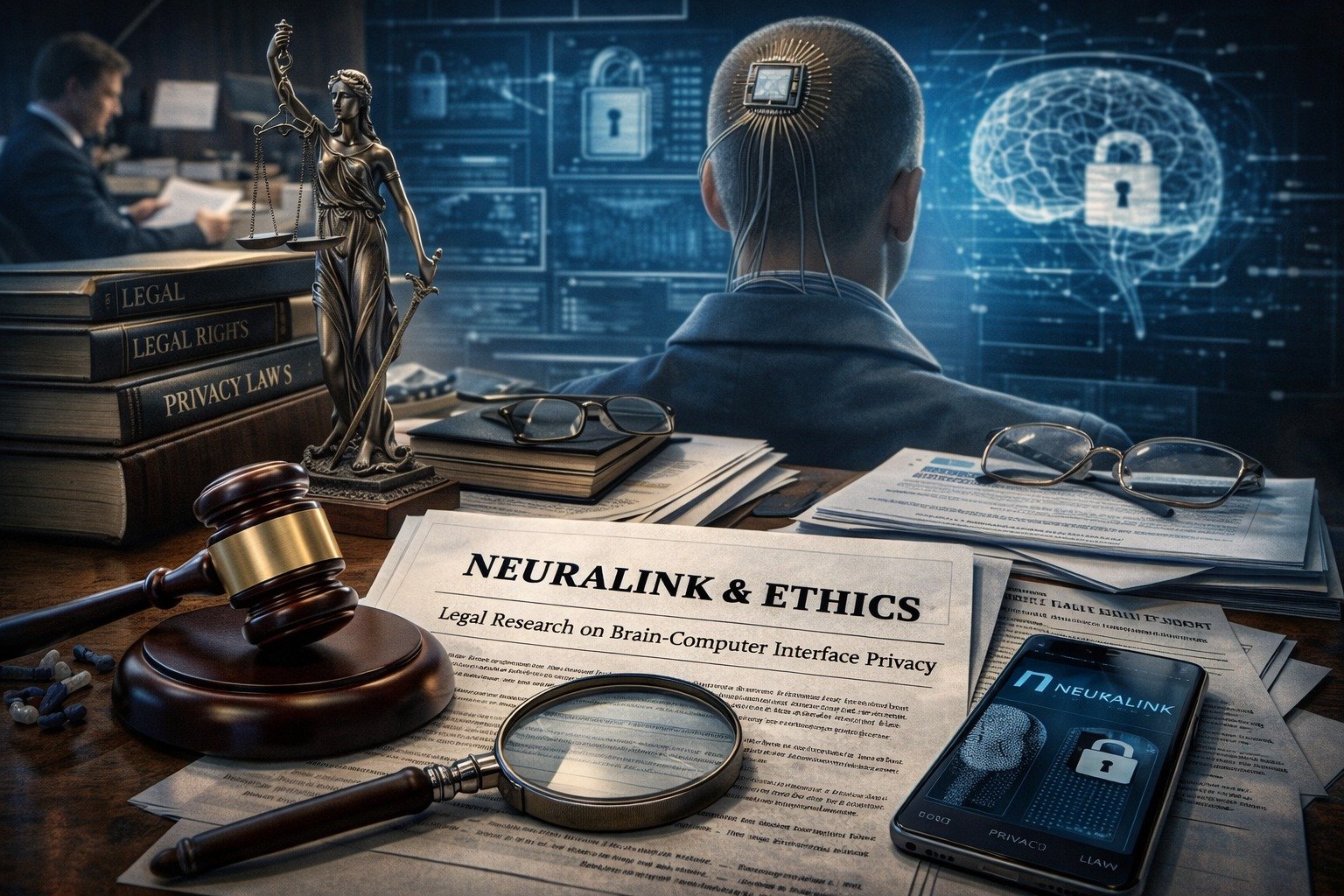
Imagine a future where thoughts can control computers, prosthetic limbs move naturally through neural signals, and people with paralysis communicate simply by thinking. Brain-computer interface (BCI) technologies are moving humanity toward that reality. Among the most prominent innovators in this field is Neuralink, a neurotechnology company developing implantable devices that connect the human brain directly to computers.
These technologies promise extraordinary benefits. People with spinal cord injuries may regain the ability to interact with digital devices. Neurological diseases such as Parkinson’s or epilepsy may become easier to treat. Scientists envision a world where cognitive abilities can be enhanced through direct interaction between brains and machines.
Yet beneath this remarkable potential lies a complex legal and ethical puzzle. When technology can access signals from the brain itself, it raises unprecedented questions about privacy, autonomy, data ownership, and human rights. The central concern is simple yet profound: who controls the information generated by the human mind?
This article explores the legal and ethical challenges surrounding Neuralink and brain-computer interfaces, focusing on privacy rights, neural data ownership, cybersecurity risks, and emerging global regulations. As neurotechnology advances, lawmakers and ethicists must grapple with questions that previous generations could scarcely imagine.
Understanding Brain-Computer Interfaces
A brain-computer interface is a system that enables direct communication between the human brain and an external device. Instead of using muscles or speech, BCIs interpret electrical signals produced by neural activity and convert them into commands.
There are two main categories of BCIs:
1. Non-invasive BCIs
These systems use external sensors such as EEG headsets to detect brain activity.
2. Invasive BCIs
These require surgical implants placed directly in the brain. Neuralink’s implant belongs to this category.
Neuralink’s device uses extremely thin electrodes inserted into the brain to detect neural signals and transmit them to external computers. The system can then translate these signals into digital actions, such as moving a cursor or typing text through thought alone.
The technology has already demonstrated promising results in early clinical trials, enabling patients with paralysis to control computers using neural signals.
While these developments are inspiring, they also introduce a new category of personal information known as neural data.
The Unique Nature of Neural Data
Neural data refers to information collected directly from brain activity. Unlike other forms of personal data such as browsing history or location tracking, neural data may reveal deeply personal aspects of a person’s identity.
Researchers warn that brain signals could potentially reveal:
- Emotional states
- Cognitive patterns
- Mental health conditions
- Memories or intentions
- Personal preferences
Because BCIs operate by capturing neural signals, they may access information that people themselves are not consciously aware of expressing. This raises concerns about what scholars describe as mental privacy, the right to keep one’s thoughts private.
In many ways, neural data represents the most intimate form of personal information ever collected.
Neuralink and the Rise of Neurotechnology
Neuralink was founded in 2016 with the goal of creating advanced brain-machine interfaces that can integrate humans with artificial intelligence.
The company’s technology focuses primarily on medical applications, including:
- Restoring mobility for paralyzed individuals
- Treating neurological disorders
- Enabling communication for patients who cannot speak
Recent human trials have shown patients controlling computers through thought alone, highlighting the transformative potential of these devices.
However, as the technology progresses from experimental research to commercial deployment, ethical and legal concerns are becoming increasingly urgent. Researchers note that commercialization of BCIs may move faster than regulatory systems designed to govern them.
This gap between technological capability and legal oversight is at the center of the current debate.
Privacy Risks in Brain-Computer Interfaces
Traditional digital privacy concerns revolve around data collected through phones, websites, or surveillance systems. BCIs introduce a new dimension of risk because they interact directly with neural activity.
One major concern is the potential for thought surveillance. If brain signals can be decoded with sufficient accuracy, companies or governments could theoretically analyze a person’s internal mental states.
Scholars warn that brain-computer interfaces may gain access to extremely private thoughts and emotions depending on where electrodes are implanted.
Even if current technology cannot read complex thoughts, advances in artificial intelligence could significantly improve interpretation of neural signals.
Another concern involves secondary data use. Neural data collected for medical purposes could potentially be used for:
- Behavioral advertising
- Psychological profiling
- Insurance risk analysis
- Political targeting
These possibilities highlight the need for strict legal safeguards.
Data Ownership: Who Owns Brain Data?
One of the most complicated legal questions surrounding BCIs is the issue of data ownership.
When neural data is generated through a brain implant, several parties may claim rights over that information:
- The patient or user
- The technology company
- Medical researchers
- Healthcare providers
Current legal systems provide limited clarity on this issue. Many privacy laws were written before neurotechnology existed.
For example, the U.S. Health Insurance Portability and Accountability Act (HIPAA) protects medical information but only applies when data is handled by specific healthcare entities. Neural data collected outside those contexts may fall outside its protection.
This regulatory gap means that neural data might not always receive the same legal protection as other sensitive medical information.
Cybersecurity and Brain Hacking
Another emerging concern is the possibility of brain hacking.
Because BCIs connect the brain to digital networks, they create potential cybersecurity vulnerabilities. Researchers warn that malicious actors could theoretically intercept neural data or manipulate signals sent to the brain.
Studies indicate that hackers could analyze neural datasets using machine learning algorithms to infer private information about users without consent.
Although such attacks remain largely theoretical today, cybersecurity experts emphasize that preventive measures must be implemented early in the development of neurotechnology.
The consequences of compromised neural systems could be far more serious than typical data breaches.
Human Rights and the Concept of “Neurorights”
As neurotechnology evolves, legal scholars have proposed a new category of human rights known as neurorights.
These rights aim to protect individuals from misuse of technologies that interact directly with the brain. Key neurorights concepts include:
Mental privacy
The right to keep thoughts and neural activity private.
Cognitive liberty
The freedom to control one’s own mental processes.
Mental integrity
Protection against unauthorized manipulation of brain activity.
Psychological continuity
The right to maintain personal identity without technological interference.
These ideas have gained international attention, with several countries considering laws specifically designed to protect neural information.
Global Regulatory Efforts
Governments and international organizations are beginning to address the legal challenges posed by brain-computer interfaces.
For example, UNESCO has introduced global standards recommending stronger safeguards for neural data and mental privacy.
These guidelines emphasize:
- Transparent data collection practices
- Strong consent mechanisms
- Limits on commercial use of neural data
- Protection of cognitive autonomy
Some countries are also exploring constitutional protections for neurorights, recognizing that traditional privacy laws may not adequately address neurotechnology.
Ethical Concerns Beyond Privacy
While privacy is a central issue, BCIs also raise broader ethical questions.
Informed Consent
Implantable BCIs involve complex surgical procedures and experimental technology. Ensuring that patients fully understand the risks is essential.
Ethicists emphasize that participants must be aware not only of medical risks but also of potential data and privacy implications.
Human Identity
Some scholars argue that integrating technology with the brain may alter how individuals experience identity and consciousness.
Because BCIs can both read and potentially stimulate neural activity, they may influence decision-making or emotional states.
Inequality and Access
Advanced neurotechnology could also create social inequality.
If cognitive enhancement technologies become available only to wealthy individuals, they may widen existing social and economic gaps.
Commercialization and Corporate Responsibility
As companies race to develop neurotechnology, corporate ethics will play a crucial role in shaping the future of BCIs.
Technology firms handling neural data must address several responsibilities:
- Transparent data policies
- Secure data storage
- Clear user consent procedures
- Strict limits on data sharing
Recent investigations have already raised concerns about how some neurotechnology companies collect and share neural data.
Without strong oversight, commercialization could lead to exploitation of sensitive neural information.
Future Legal Challenges
As brain-computer interfaces become more sophisticated, several legal challenges are likely to emerge.
Liability
If a neural implant malfunctions and causes harm, determining liability could be complicated. Responsibility might fall on:
- Device manufacturers
- Software developers
- Healthcare providers
Criminal Law
BCIs may eventually raise questions in criminal law. For example:
- Could neural data be used as evidence in court?
- Could someone be forced to reveal brain activity during investigations?
Intellectual Property
As neural signals are translated into digital outputs, disputes may arise over who owns the resulting information.
These challenges highlight how neurotechnology is pushing legal systems into uncharted territory.
Balancing Innovation and Regulation
Despite ethical concerns, many experts emphasize that brain-computer interfaces hold enormous potential for improving human health and well-being.
BCIs could transform treatment for neurological conditions such as:
- ALS
- Parkinson’s disease
- Epilepsy
- Spinal cord injuries
The challenge is not to halt innovation but to ensure that it develops responsibly.
Effective governance must balance two priorities:
- Encouraging scientific progress
- Protecting fundamental human rights
The Future of Brain-Computer Interface Privacy
As neurotechnology advances, legal frameworks must evolve accordingly.
Experts recommend several policy measures to protect neural privacy:
- Recognizing neural data as highly sensitive personal information
- Creating dedicated neurotechnology regulations
- Strengthening cybersecurity standards for BCIs
- Ensuring informed consent and transparency
- Establishing international guidelines for neurorights
These protections could help ensure that brain-computer interfaces remain tools of empowerment rather than instruments of surveillance or exploitation.
Conclusion
Neuralink and other brain-computer interface technologies represent one of the most fascinating frontiers of modern science. By connecting human brains directly to machines, these systems promise to transform medicine, communication, and human capability.
However, the same technology that enables groundbreaking medical treatments also introduces unprecedented legal and ethical questions.
When devices can access neural signals, privacy no longer concerns only our actions but also our thoughts. Protecting mental privacy, cognitive autonomy, and neural data ownership will become essential challenges for policymakers in the coming decades.
The future of neurotechnology will ultimately depend not only on scientific innovation but also on thoughtful governance. By developing strong ethical standards and legal protections today, society can ensure that brain-computer interfaces benefit humanity while safeguarding the most personal domain of all: the human mind.













Leave a Reply