


Introduction
Modern medicine has achieved remarkable advancements in surgical care, allowing doctors to perform complex procedures that save millions of lives every year. However, despite technological progress and improved training, surgical errors still occur. When a surgical mistake causes serious injury or death, patients and families may pursue compensation through medical malpractice claims.
Surgical malpractice lawsuits are among the most complex types of personal injury cases. Determining whether a surgeon acted negligently requires careful analysis of medical records, expert testimony, and legal standards. As a result, individuals researching surgical error settlements often need to understand both the medical and legal aspects of malpractice litigation.
For patients, families, journalists, and legal researchers, studying past surgical error settlements can provide valuable insights into how courts and insurance companies evaluate these cases. Settlement research can help estimate potential compensation values, identify common types of surgical negligence, and understand the factors that influence case outcomes.
This guide explains how surgical malpractice claims work, how settlement amounts are determined, and how to research past surgical error settlements using reliable legal and medical sources.
Understanding Medical Malpractice
Medical malpractice occurs when a healthcare professional fails to provide treatment that meets the accepted standard of care, resulting in harm to a patient.
To establish malpractice in court, four key elements generally must be proven:
Duty of Care
A doctor–patient relationship must exist, establishing the healthcare provider’s responsibility to provide proper treatment.
Breach of Standard of Care
The healthcare provider must have acted in a way that deviates from accepted medical practices.
Causation
The patient must demonstrate that the provider’s negligence directly caused the injury.
Damages
The patient must have suffered measurable harm, such as physical injury, emotional distress, or financial loss.
If these elements are proven, the patient may be entitled to compensation through a malpractice claim.
What Are Surgical Errors?
Surgical errors refer to preventable mistakes that occur during or around the time of a surgical procedure.
These errors can happen before, during, or after surgery and may involve multiple members of the medical team.
Common types of surgical errors include:
Wrong-Site Surgery
Operating on the wrong body part or performing the wrong procedure.
Retained Surgical Instruments
Leaving sponges, tools, or medical devices inside the patient’s body.
Anesthesia Errors
Incorrect administration of anesthesia that causes complications such as brain injury.
Nerve Damage
Accidental injury to nerves during surgery, which may lead to chronic pain or paralysis.
Infection Due to Negligence
Improper sterilization or surgical technique leading to serious infections.
Many surgical errors are preventable when proper safety protocols are followed.
Why Surgical Error Cases Often Lead to Large Settlements
Surgical malpractice cases frequently result in high settlement values because they often involve severe injuries and long-term consequences.
Patients may suffer complications such as:
- Permanent disability
- Chronic pain
- Loss of mobility
- Organ damage
- Reduced life expectancy
Because these injuries can dramatically affect a patient’s quality of life, compensation in surgical malpractice cases can be substantial.
Settlements may include compensation for medical expenses, lost income, rehabilitation costs, and emotional suffering.
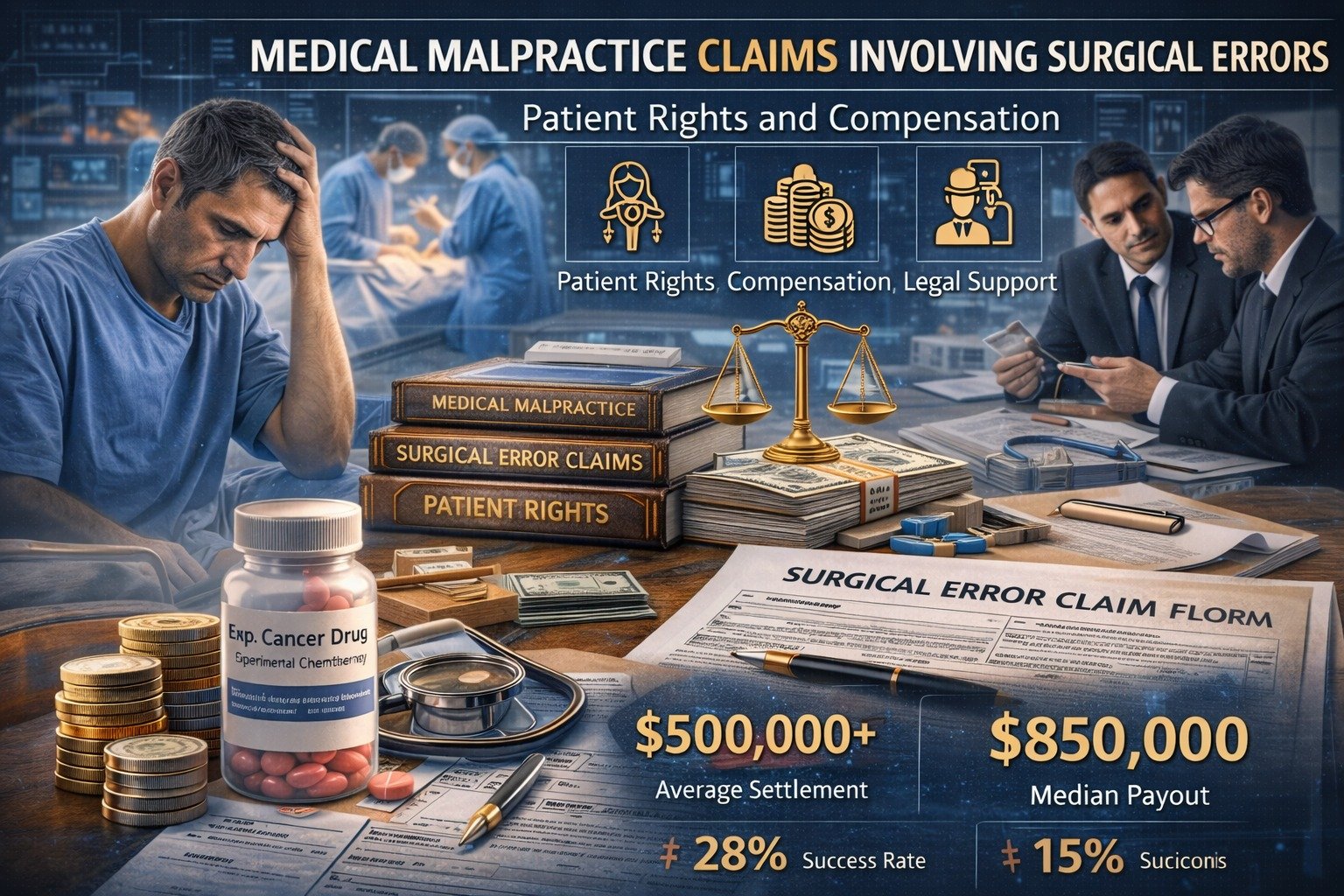
Average Settlement Values for Surgical Malpractice Cases
Settlement amounts in surgical error cases vary widely depending on the severity of the injury and the circumstances surrounding the malpractice.
While exact figures differ from case to case, general ranges often include:
Minor Surgical Injury Cases
Cases involving temporary injuries or minor complications.
Typical settlement range:
$50,000 – $200,000
Moderate Surgical Injury Cases
Cases involving significant complications requiring additional medical treatment.
Typical settlement range:
$200,000 – $750,000
Severe Surgical Malpractice Cases
Cases involving permanent disability or major organ damage.
Typical settlement range:
$750,000 – $3 million
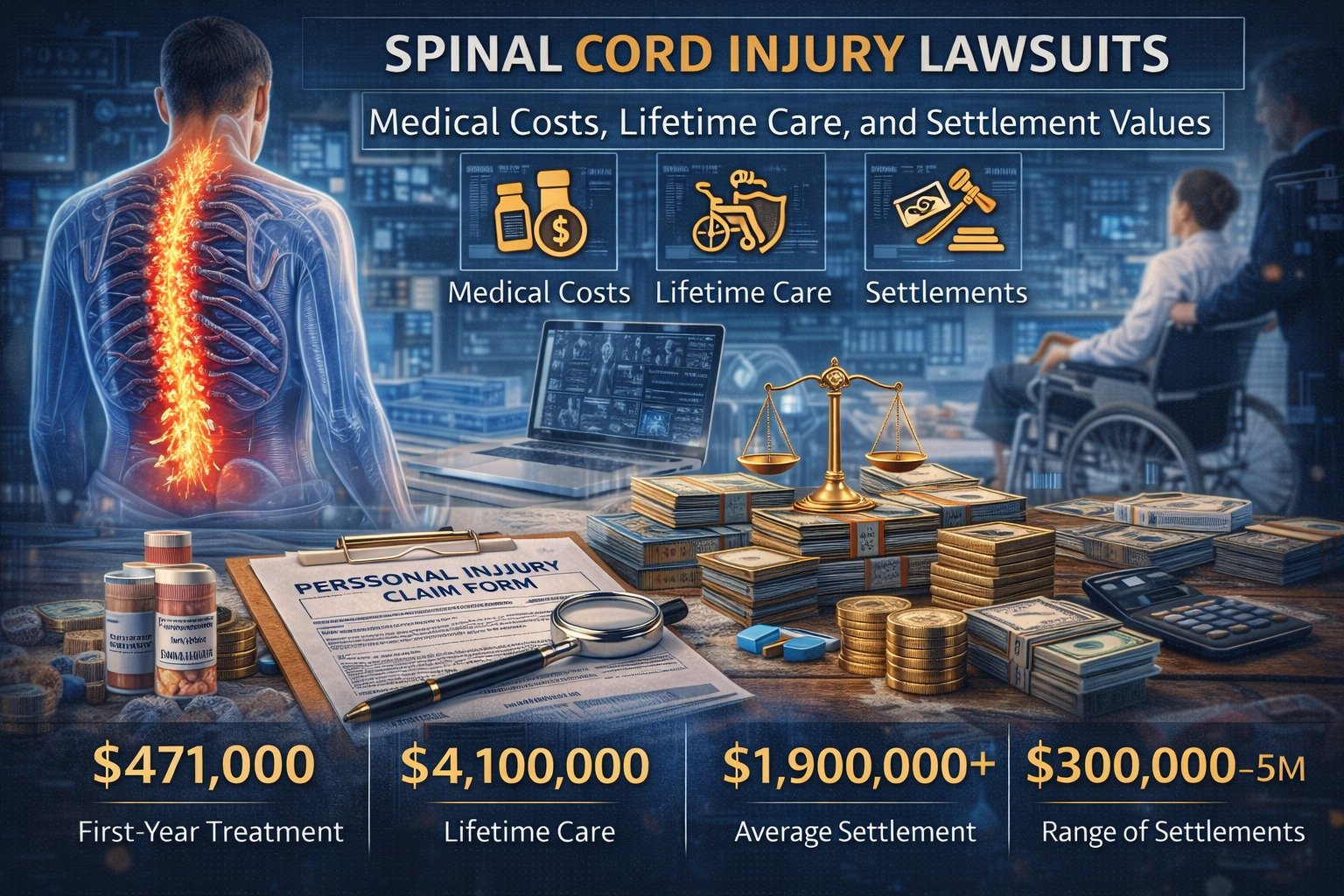
Catastrophic Injury Cases
Cases involving paralysis, brain damage, or wrongful death.
Settlement amounts may exceed $5 million or more.
These figures represent general estimates and do not guarantee specific outcomes.
Factors That Influence Surgical Malpractice Settlements
Several key factors influence the value of a surgical malpractice settlement.
Severity of the Injury
The more severe the injury, the higher the potential compensation.
Permanent disabilities or life-altering injuries typically lead to larger settlements.
Medical Expenses
Past and future medical costs play a major role in determining compensation.
These costs may include:
- Hospital bills
- Rehabilitation therapy
- Medications
- Future surgeries
Lost Income
If the injury prevents the patient from working, compensation may include lost wages and reduced earning capacity.
Pain and Suffering
Courts often consider emotional distress and reduced quality of life when calculating damages.
Strength of Evidence
Cases supported by strong medical documentation and expert testimony are more likely to result in favorable settlements.
How to Research Surgical Error Settlements
Researching malpractice settlements requires careful use of reliable sources. Several resources provide valuable information about past cases.
Court Records
Public court records often contain information about malpractice lawsuits and verdicts.
These documents may include:
- Case summaries
- Jury verdicts
- Settlement details
Court databases can provide insight into how judges and juries evaluate surgical malpractice claims.
Legal Databases
Professional legal research platforms compile extensive collections of malpractice case outcomes.
These databases allow users to search cases by:
- Medical specialty
- Type of surgical error
- Settlement amount
- Jurisdiction
Although some databases require paid subscriptions, they provide detailed information about legal precedents.
Medical Malpractice Reports
Legal publications and industry reports often analyze malpractice trends across different medical specialties.
These reports may include statistics on:
- Average settlement values
- Common types of surgical negligence
- Trends in malpractice litigation
Such reports can help researchers understand broader patterns in malpractice claims.
Law Firm Case Studies
Many personal injury law firms publish summaries of successful malpractice cases on their websites.
These case studies may include information about:
- Injury details
- Legal strategies
- Settlement outcomes
While these reports may highlight favorable outcomes, they can still provide useful insights into typical settlement ranges.
The Role of Medical Experts in Malpractice Cases
Medical malpractice cases often rely heavily on expert testimony.
Medical experts evaluate whether the surgeon’s actions met the accepted standard of care.
These experts may:
- Review medical records
- Analyze surgical procedures
- Provide testimony in court
Expert opinions play a crucial role in determining whether negligence occurred.
Statutes of Limitations in Malpractice Cases
Medical malpractice claims are subject to statutes of limitations, which limit the time patients have to file lawsuits.
These time limits vary by state but often range between one and three years after the injury occurs or is discovered.
Failure to file a claim within the allowed time period may prevent victims from pursuing compensation.
Understanding these deadlines is critical for individuals considering legal action.
Challenges in Surgical Malpractice Litigation
Surgical malpractice cases can be difficult to prove.
Several challenges often arise during litigation.
Complex Medical Evidence
Understanding surgical procedures and medical terminology may require expert analysis.
Strong Defense Teams
Hospitals and surgeons are often represented by experienced legal teams.
High Litigation Costs
Medical malpractice lawsuits can be expensive due to expert witness fees and extensive investigations.
Because of these challenges, many patients seek legal representation from attorneys who specialize in malpractice law.
The Importance of Medical Records
Medical records are essential evidence in surgical malpractice cases.
These records may include:
- Surgical reports
- Hospital charts
- Imaging scans
- Postoperative notes
Careful review of medical records can reveal whether proper procedures were followed during surgery.
Preventing Surgical Errors
Healthcare institutions have implemented several safety measures to reduce surgical errors.
Common safety protocols include:
- Surgical checklists
- Preoperative verification procedures
- Time-out protocols before surgery begins
- Improved communication among surgical teams
These practices aim to reduce preventable mistakes and improve patient safety.
The Future of Surgical Malpractice Research
Advances in technology may change how surgical malpractice cases are investigated.
For example, hospitals increasingly use digital systems that record detailed information about surgical procedures.
Technologies such as surgical robots and real-time monitoring systems may also provide more precise records of surgical actions.
These developments could improve accountability and reduce the likelihood of medical errors.
Conclusion
Surgical errors remain one of the most serious forms of medical malpractice. When negligence during surgery causes harm, patients may pursue compensation through malpractice claims and settlements.
Understanding how surgical error settlements are determined requires knowledge of both medical and legal factors. Settlement amounts depend on injury severity, medical costs, lost income, and the strength of evidence supporting the claim.
For researchers and individuals seeking information about malpractice cases, reliable sources such as court records, legal databases, and malpractice reports can provide valuable insights.
Although malpractice litigation can be complex, studying past settlements can help individuals better understand how the legal system addresses surgical negligence and compensates victims.
Ultimately, the goal of malpractice law is not only to provide compensation for injured patients but also to promote safer medical practices and accountability within healthcare systems.









Leave a Reply