

Table of Contents
- Surgical Errors and Medical Malpractice
- Common Types of Surgical Errors
- Why Surgical Errors Occur
- Medical Consequences of Surgical Negligence
- Patient Rights After a Surgical Error
- Medical Malpractice Claims Explained
- Compensation and Settlement Values
- Factors That Determine Claim Strength
- Time Limits and Legal Deadlines
- Frequently Asked Questions
1. Surgical Errors and Medical Malpractice
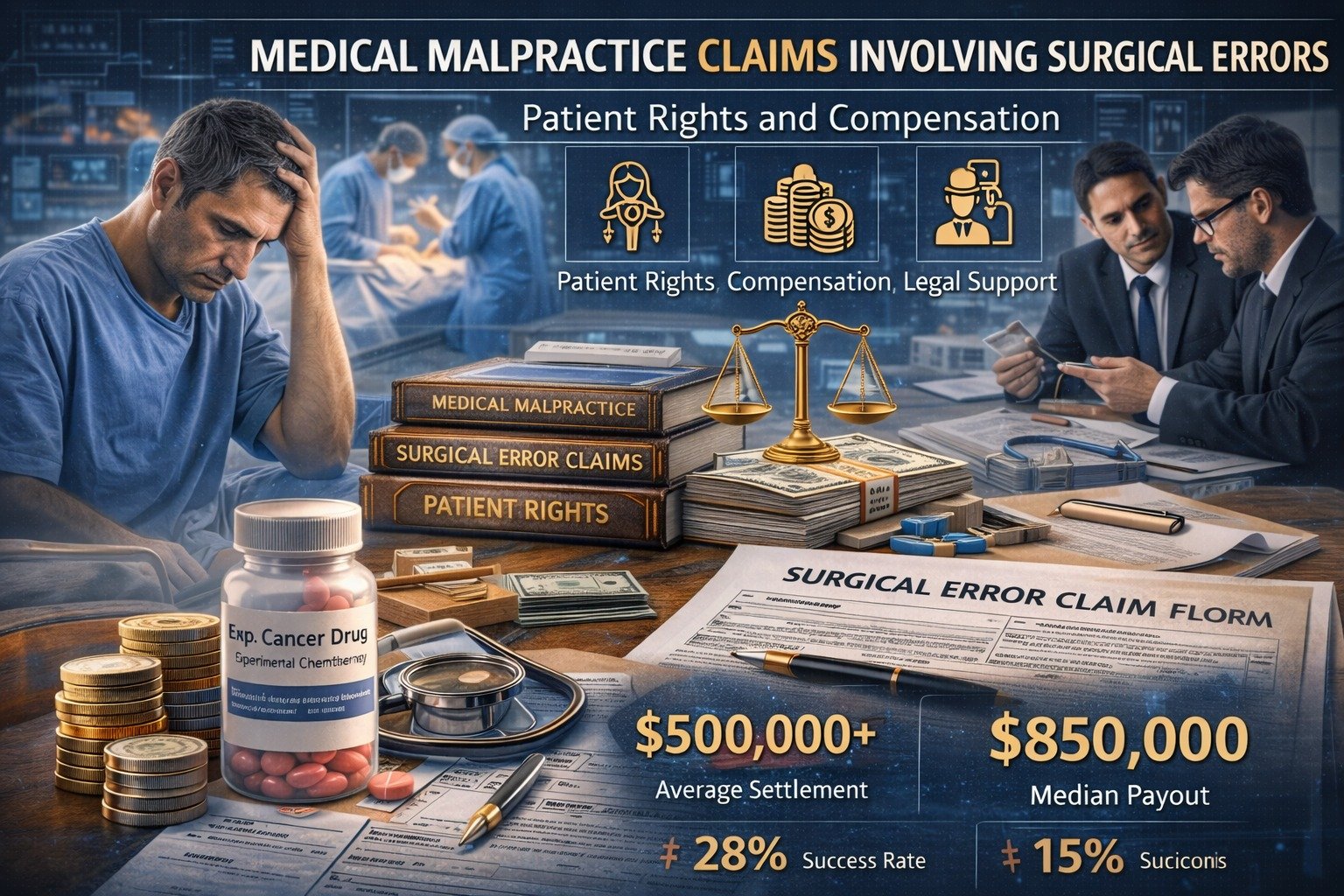
Surgical errors are preventable mistakes occurring before, during, or after surgery that cause patient harm. When these errors result from negligence rather than unavoidable complications, they constitute medical malpractice. Surgical malpractice claims are among the highest-value medical injury cases due to permanent damage, repeat surgeries, and long-term disability.
2. Common Types of Surgical Errors
Surgical malpractice typically involves clear procedural failure:
- Wrong-site or wrong-patient surgery
- Retained surgical instruments
- Nerve, organ, or vessel damage
- Anesthesia administration errors
- Infection due to improper sterilization
- Failure to monitor post-operative complications
These errors violate established surgical standards.
3. Why Surgical Errors Occur
Surgical negligence stems from systemic and individual failures:
- Inadequate preoperative planning
- Poor communication among surgical staff
- Fatigue and understaffing
- Inadequate training or supervision
- Rushed procedures and time pressure
Most surgical errors are not isolated mistakes but predictable failures.
4. Medical Consequences of Surgical Negligence
Surgical errors frequently cause irreversible harm.
Common outcomes include:
- Permanent nerve damage
- Internal bleeding and organ failure
- Chronic pain and disability
- Infection and sepsis
- Loss of bodily function
- Death
Corrective surgery increases physical risk and financial burden.
5. Patient Rights After a Surgical Error
Patients harmed by surgical negligence retain enforceable rights:
- Access to full medical records
- Right to independent medical evaluation
- Right to informed consent disclosure
- Right to pursue compensation for harm
Hospitals are not obligated to disclose negligence voluntarily.
6. Medical Malpractice Claims Explained
A surgical malpractice claim requires proof of:
- Provider duty of care
- Breach of accepted surgical standards
- Direct causation of injury
- Documented damages
Claims target surgeons, anesthesiologists, hospitals, or surgical centers. Most cases resolve through settlement due to litigation risk.
7. Compensation and Settlement Values
Surgical malpractice settlements vary by injury severity.
Typical compensation ranges:
- Minor surgical injury: $250,000–$750,000
- Permanent disability: $1 million–$5 million
- Catastrophic injury or death: $5 million+
Damages include medical costs, lost income, future care, pain, and reduced quality of life.
8. Factors That Determine Claim Strength
Claim valuation depends on:
- Clear deviation from surgical standards
- Severity and permanence of injury
- Quality of medical documentation
- Expert witness support
- Patient age and earning capacity
- Jurisdiction-specific damage caps
Strong documentation outweighs hospital reputation.
9. Time Limits and Legal Deadlines
Medical malpractice claims are subject to strict statutes of limitation. Filing deadlines range from one to three years in most jurisdictions. Delayed discovery exceptions are narrow. Missed deadlines eliminate compensation eligibility regardless of injury severity.
10. Frequently Asked Questions
Are all surgical complications malpractice?
No. Only preventable errors caused by negligence qualify.
Can hospitals be held liable?
Yes. Institutional negligence frequently applies.
Is expert testimony required?
Yes. Surgical malpractice claims require medical expert validation.
Do most cases go to trial?
No. The majority resolve through settlement.
Are malpractice settlements taxable?
Compensation for physical injury is generally non-taxable, excluding punitive damages.










Leave a Reply