
By the Radal Editorial Team
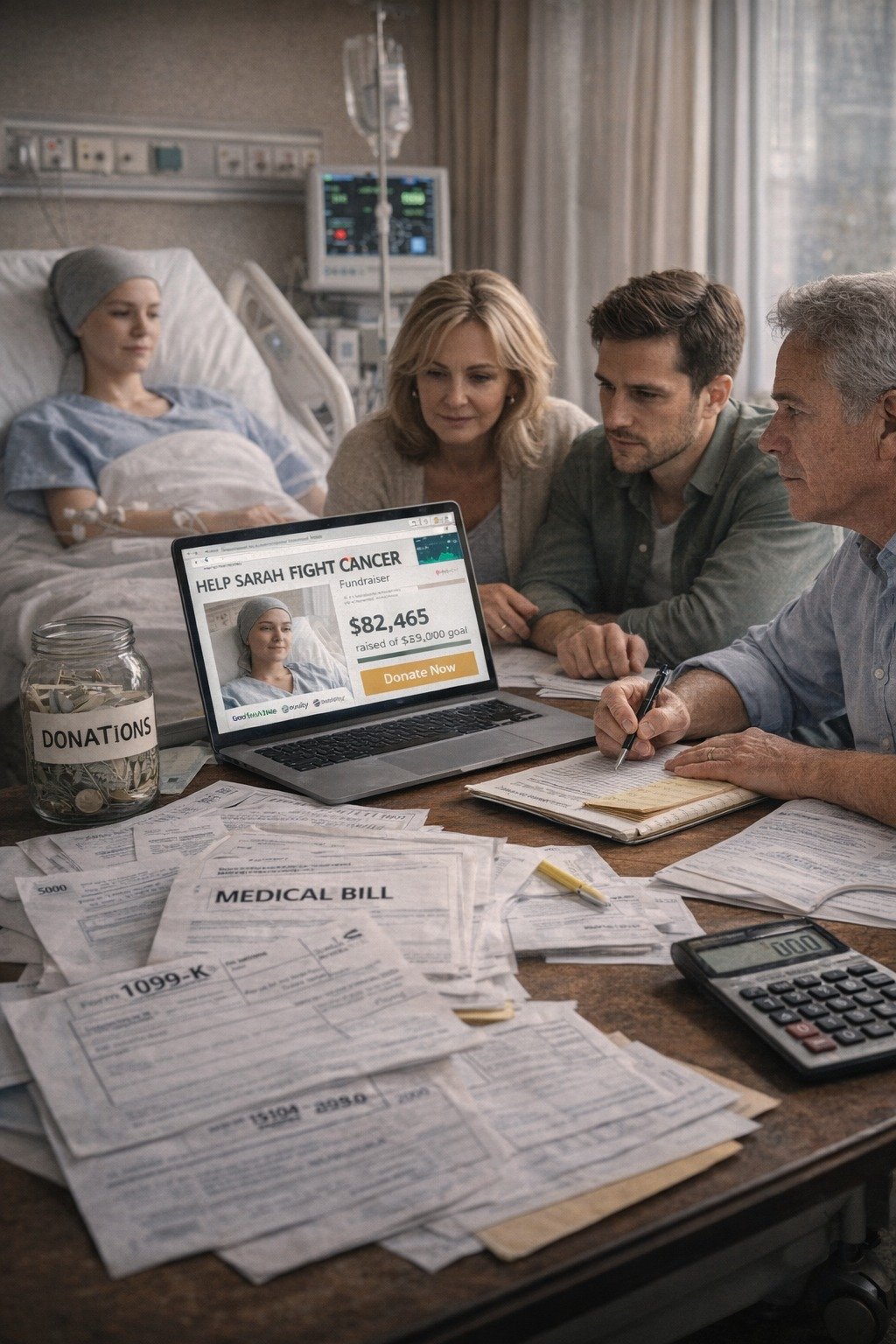
In 2026, the gap between medical breakthroughs and insurance coverage has never been wider. Whether it is a $2 million gene therapy or an out-of-network experimental cancer treatment, more families are turning to platforms like GoFundMe, GiveSendGo, and Fundly to bridge the financial divide.
However, medical crowdfunding is no longer as simple as “post and pray.” In 2026, the IRS has tightened reporting requirements, and donor fatigue is at an all-time high. To succeed, a campaign must be run like a professional non-profit. This guide outlines the best practices for setting up a campaign and the critical tax implications you must know to avoid a surprise bill from the IRS.
1. Choosing the Right Platform in 2026
While GoFundMe remains the industry giant, specialized platforms have emerged in 2026 that cater specifically to the medical community:
- GoFundMe: Best for broad social reach and ease of use.
- GiveSendGo: Popular for those seeking a faith-based or community-heavy support structure with lower platform fees.
- Co-Help (New in 2026): A specialized platform that allows donors to pay medical providers directly, which has significant tax benefits (see Section 5).
2. Best Practices for a High-Converting Campaign
Success in medical crowdfunding is driven by authenticity and transparency.
A. The “Vulnerability Framework” for Your Story
Donors in 2026 are wary of fraud. To build trust, your story must include:
- The Diagnosis: Clear, plain-language explanation of the condition.
- The Financial Gap: Precisely why insurance is failing (e.g., “The treatment is FDA-approved but considered ‘investigational’ by our provider”).
- The Human Impact: How this treatment changes the patient’s daily life, not just their medical charts.
B. High-Quality Visual Storytelling
Campaigns with video updates raise 300% more than those with text alone.
- The 60-Second Pitch: A short video introducing the patient and the “call to action.”
- The “Proof of Need”: Posting a redacted version of a hospital cost estimate or a doctor’s recommendation letter.
3. The 2026 IRS Reporting Shift (The $600 Rule)
This is the most critical update for 2026. Following the full implementation of updated tax laws, payment processors (like Stripe or PayPal used by crowdfunding sites) are now strictly required to issue a Form 1099-K to anyone who receives more than $600 in gross payments during the year.
What this means for you: Even though the money you receive is likely a “gift” (and thus non-taxable), the IRS will receive a record of that income. If you do not report it correctly, you will receive an automated tax bill.
4. Tax Implications: Is It Income or a Gift?
In 2026, the IRS treats most medical crowdfunding as Personal Gifts, provided the donors receive nothing in return (no “rewards” or “services”).
- The Annual Exclusion: In 2026, the annual gift tax exclusion is $19,000 per donor. This means a single person can give you $19,000 without any tax filings.
- Non-Taxable Status: For the recipient, these gifts are generally not included in gross income.
- The Reward Trap: If you offer “thank you gifts” (like t-shirts or bracelets) in exchange for donations, the IRS may reclassify those funds as taxable business income.
5. The “Medical Exception” Strategy (Section 2503(e))
The smartest way to crowdfund in 2026 is to have donors pay the hospital or doctor directly if possible. Under IRC Section 2503(e), payments made directly to a medical provider for someone else’s care are:
- Unlimited: They do not count toward the $19,000 gift limit.
- Tax-Free: They are completely exempt from gift tax.
- Audit-Proof: Since the money never hits your personal bank account, you avoid the 1099-K reporting headache altogether.
6. Managing the Funds: A Dedicated Account
Never co-mingle crowdfunding money with your personal checking account.
- Open a “Medical Special Needs” Account: This keeps the paper trail clean for the IRS.
- Assign a Treasurer: If the patient is incapacitated, assign a trusted family member to manage the withdrawals and keep receipts of every medical bill paid.
7. Conclusion
Medical crowdfunding is a powerful tool, but it requires strategic execution and tax-savvy management. By being transparent with your donors and keeping rigorous records for the IRS, you can focus on what matters most: the health and recovery of your loved one.






Leave a Reply