

Introduction
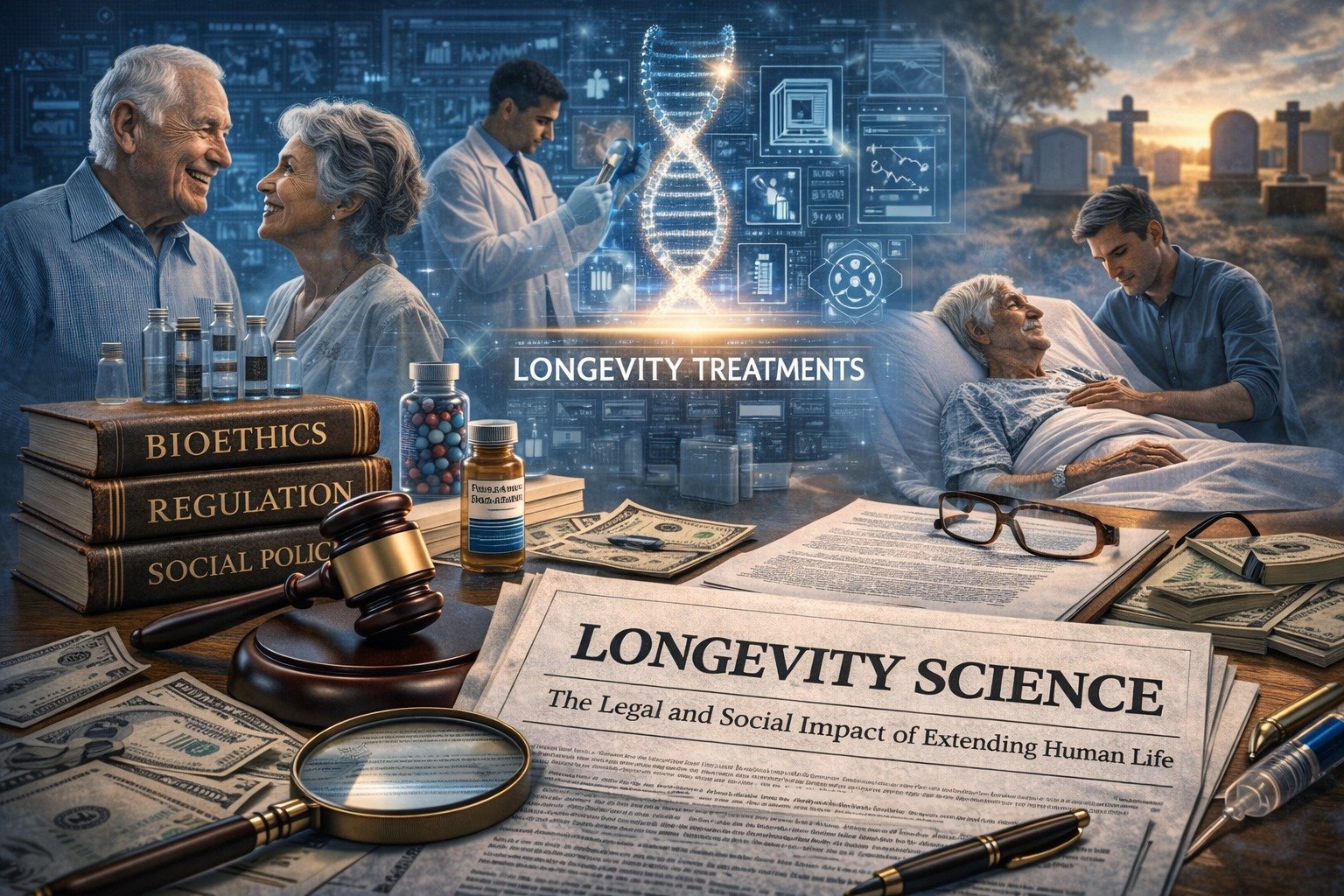
For most of human history, aging has been considered an unavoidable biological reality. Medical science could treat diseases and extend life expectancy modestly, but the fundamental process of aging remained largely beyond human control. In recent decades, however, advances in biotechnology, genetics, and regenerative medicine have begun to challenge that assumption.
The emerging field known as longevity science focuses on understanding the biological mechanisms that cause aging and developing technologies that can slow, halt, or even reverse these processes. Scientists are exploring therapies that target cellular aging, repair DNA damage, and regenerate tissues. Some researchers believe that humans may eventually be able to extend healthy life spans by decades.
While these developments hold enormous promise for improving human health, they also raise profound legal and social questions. If longevity technologies significantly extend human life, societies will face challenges related to healthcare systems, retirement policies, economic inequality, and legal definitions of aging.
This article examines the science behind longevity research and explores the legal, economic, and social implications of dramatically extending human life.
The Science Behind Longevity Research
Longevity science focuses on understanding the biological mechanisms that drive aging. Researchers have identified several key processes that contribute to the gradual decline of the human body over time.
Cellular Senescence
Cells eventually lose their ability to divide and function properly. These aging cells accumulate in tissues and contribute to inflammation and disease.
DNA Damage
Over time, DNA molecules accumulate mutations caused by environmental factors and natural biological processes.
Telomere Shortening
Telomeres are protective caps at the ends of chromosomes. Each time a cell divides, telomeres become shorter, eventually limiting the cell’s ability to replicate.
Mitochondrial Dysfunction
Mitochondria produce energy for cells. Age-related damage to mitochondria can reduce cellular efficiency and contribute to disease.
Scientists are developing therapies that target these mechanisms to slow the aging process and improve health during later life.
Emerging Longevity Technologies
Several promising technologies are currently being explored in longevity research.
Gene Therapy
Gene-editing technologies may be used to repair genetic damage or activate genes that promote cellular repair.
Senolytic Drugs
These drugs target and eliminate senescent cells that accumulate in aging tissues.
Stem Cell Therapy
Stem cells can regenerate damaged tissues and may help restore organ function.
Epigenetic Reprogramming
Researchers are investigating ways to reset cellular aging by modifying epigenetic markers that control gene activity.
Regenerative Medicine
Advanced medical treatments may one day replace or repair aging organs using tissue engineering or bioprinting.
While many of these technologies remain experimental, rapid progress in biotechnology suggests that significant breakthroughs may occur in the coming decades.
Longevity and the Concept of Healthspan
A key goal of longevity science is not simply extending lifespan but increasing healthspan—the period of life spent in good health.
In many modern societies, people live longer but often experience chronic diseases such as heart disease, diabetes, and neurodegenerative conditions in later years.
Longevity researchers aim to delay the onset of these conditions so individuals can remain healthy and active for longer periods.
If successful, longevity technologies could transform aging from a period of decline into a longer stage of healthy life.
Legal Challenges of Extended Lifespans
Extending human life significantly could create complex legal challenges.
Many legal systems are structured around assumptions about typical human lifespans. If people begin living much longer, existing laws may require major adjustments.
Retirement and Pension Systems
Retirement policies and pension programs are designed around current life expectancy patterns.
If individuals routinely live well beyond 100 years, retirement systems may become financially unsustainable without major reforms.
Governments may need to reconsider retirement ages and pension structures.
Inheritance and Property Law
Longer lifespans could alter patterns of wealth transfer across generations.
If individuals live significantly longer, inheritance may be delayed for decades, affecting family financial planning and economic mobility.
Legal frameworks governing estate planning may require adjustments.
Employment and Labor Laws
Extended lifespans could reshape workforce dynamics.
Older individuals may remain employed for longer periods, potentially affecting job opportunities for younger workers.
Labor laws and workplace policies may need to adapt to accommodate longer careers.
Healthcare System Implications
Longevity technologies could have both positive and challenging effects on healthcare systems.
Reduced Chronic Disease Burden
If aging-related diseases are delayed or prevented, healthcare systems may experience lower long-term treatment costs.
Increased Demand for Preventive Care
Longevity medicine may shift healthcare focus toward preventive treatments that maintain health rather than treating illness.
Cost of Advanced Therapies
Some longevity treatments may initially be extremely expensive, raising questions about access and affordability.
Healthcare systems must balance innovation with equitable access to emerging medical technologies.
Economic Impact of Longevity
Extending human life could have significant economic consequences.
Productivity and Workforce Participation
Longer healthy lifespans could allow individuals to remain productive for more years, potentially boosting economic growth.
Education and Career Changes
People may pursue multiple careers throughout their lives if working lifespans increase.
Education systems may evolve to support lifelong learning.
Consumer Behavior
Longer lives may influence savings patterns, investment strategies, and housing markets.
These changes could reshape economic structures in ways that societies have not previously experienced.
Ethical Concerns About Longevity Technologies
While longevity science offers exciting possibilities, it also raises important ethical questions.
Inequality of Access
Advanced longevity treatments may initially be available only to wealthy individuals.
This could create a scenario where life-extending technologies widen existing social inequalities.
Overpopulation Concerns
Some critics argue that dramatically extending human lifespans could contribute to global population growth.
However, demographic patterns are complex, and many developed countries currently face declining birth rates.
Cultural Perspectives on Aging
Different cultures view aging and longevity in diverse ways.
Societies may debate whether extending human life indefinitely aligns with cultural values and philosophical beliefs.
Longevity and Human Identity
The possibility of significantly longer lifespans raises philosophical questions about the meaning of human life.
If people routinely live for 120 years or longer, traditional milestones such as education, career progression, and retirement may be redefined.
Extended lifespans could reshape how individuals plan their lives, relationships, and personal goals.
These changes may influence social norms and cultural expectations.
Regulation of Longevity Medicine
Governments and regulatory agencies will play an important role in overseeing longevity technologies.
Regulators must ensure that new treatments meet safety and efficacy standards before reaching the public.
Potential regulatory approaches include:
- Clinical trial requirements for anti-aging therapies
- Oversight of genetic modification technologies
- Ethical guidelines for human enhancement treatments
- Monitoring of long-term health effects
Balancing scientific innovation with patient safety will remain a key priority.
The Role of Artificial Intelligence in Longevity Research
Artificial intelligence is accelerating progress in longevity science.
AI systems can analyze vast amounts of biological data to identify patterns associated with aging and disease.
Researchers use AI to:
- Discover potential anti-aging drug candidates
- Analyze genetic data
- Predict disease risks
- Model biological processes
These tools may dramatically shorten the time required to develop new therapies.
Global Competition in Longevity Research
Longevity science has become an area of intense global competition.
Biotechnology companies, research institutions, and governments are investing heavily in aging research.
Major investments are being made in fields such as:
- Gene editing
- regenerative medicine
- AI-driven drug discovery
- cellular rejuvenation technologies
Countries that lead in longevity science may gain significant advantages in healthcare innovation and biotechnology industries.
Social Adaptation to Longer Lives
If longevity technologies become widely available, societies will need to adapt to new demographic realities.
Education Systems
Education may shift toward continuous learning rather than front-loaded early-life training.
Urban Planning
Cities may need infrastructure designed for multigenerational populations.
Family Structures
Longer lifespans could change family dynamics, with multiple living generations interacting in new ways.
Adapting social institutions to longer lives will require thoughtful planning.
The Future of Human Longevity
While dramatic lifespan extension remains a subject of ongoing research, the trajectory of biotechnology suggests that significant progress may occur in the coming decades.
Some scientists believe that aging itself may eventually be treated as a medical condition rather than an inevitable biological process.
If longevity therapies succeed in delaying aging-related diseases, the average human lifespan could increase substantially.
Such changes would represent one of the most profound transformations in human history.
Conclusion
Longevity science is reshaping our understanding of aging and human health. Advances in genetics, biotechnology, and regenerative medicine are bringing researchers closer to the possibility of extending healthy human life.
However, the implications of these technologies extend far beyond medicine. Extended lifespans could influence legal systems, economic structures, healthcare policies, and social institutions.
Governments, scientists, and policymakers must work together to address the ethical, legal, and societal challenges associated with longevity technologies.
If managed responsibly, longevity science has the potential to improve quality of life for millions of people while transforming the future of human health.
The pursuit of longer, healthier lives is one of humanity’s oldest dreams. With modern science advancing rapidly, that dream may soon move closer to reality.












Leave a Reply