

Table of Contents
- Experimental Cancer Drugs Explained
- Why Clinical Trials Exist
- Phases of Cancer Clinical Trials
- Eligibility Criteria for Enrollment
- Common Types of Experimental Cancer Drugs
- Effectiveness and Measured Outcomes
- Risks and Limitations
- Cost Structure and Financial Impact
- Key Features of Reputable Cancer Trials
- Frequently Asked Questions
1. Experimental Cancer Drugs Explained
Experimental cancer drugs are therapies not yet approved for general clinical use. They are designed to target cancer through novel mechanisms such as immune modulation, genetic interference, or molecular targeting. These drugs enter human use only after preclinical testing demonstrates biological activity and acceptable safety margins.
Experimental does not mean unregulated. All legitimate cancer trials operate under strict federal and institutional oversight.
2. Why Clinical Trials Exist
Standard cancer treatments plateau in effectiveness. Clinical trials exist to overcome resistance, improve survival, reduce toxicity, or treat cancers with no effective standard options. Trials generate the evidence required to move therapies from hypothesis to approved treatment.
Without trials, oncology stagnates.
3. Phases of Cancer Clinical Trials
Cancer trials follow a defined progression:
- Phase I: Determines safety, dosage, and toxicity
- Phase II: Measures effectiveness against specific cancers
- Phase III: Compares new drugs to existing standard treatments
- Phase IV: Post-approval monitoring for long-term outcomes
Most patients enroll in Phase I–III trials. Risk decreases and efficacy data increases with each phase.
4. Eligibility Criteria for Enrollment
Eligibility criteria protect data integrity and patient safety.
Common requirements include:
- Confirmed cancer type and stage
- Prior treatment history
- Adequate organ function
- Performance status thresholds
- Absence of conflicting conditions
Strict criteria exclude many patients. Ineligibility reflects trial design, not patient prognosis.
5. Common Types of Experimental Cancer Drugs
Modern oncology trials focus on precision approaches:
- Immunotherapy agents targeting immune checkpoints
- Targeted therapies aimed at genetic mutations
- Cell-based therapies such as modified immune cells
- Cancer vaccines designed to trigger immune response
- Antibody-drug conjugates combining precision and cytotoxicity
These drugs aim to increase specificity while reducing systemic damage.
6. Effectiveness and Measured Outcomes
Outcomes are measured using objective endpoints:
- Tumor response rate
- Progression-free survival
- Overall survival
- Biomarker response
- Quality-of-life metrics
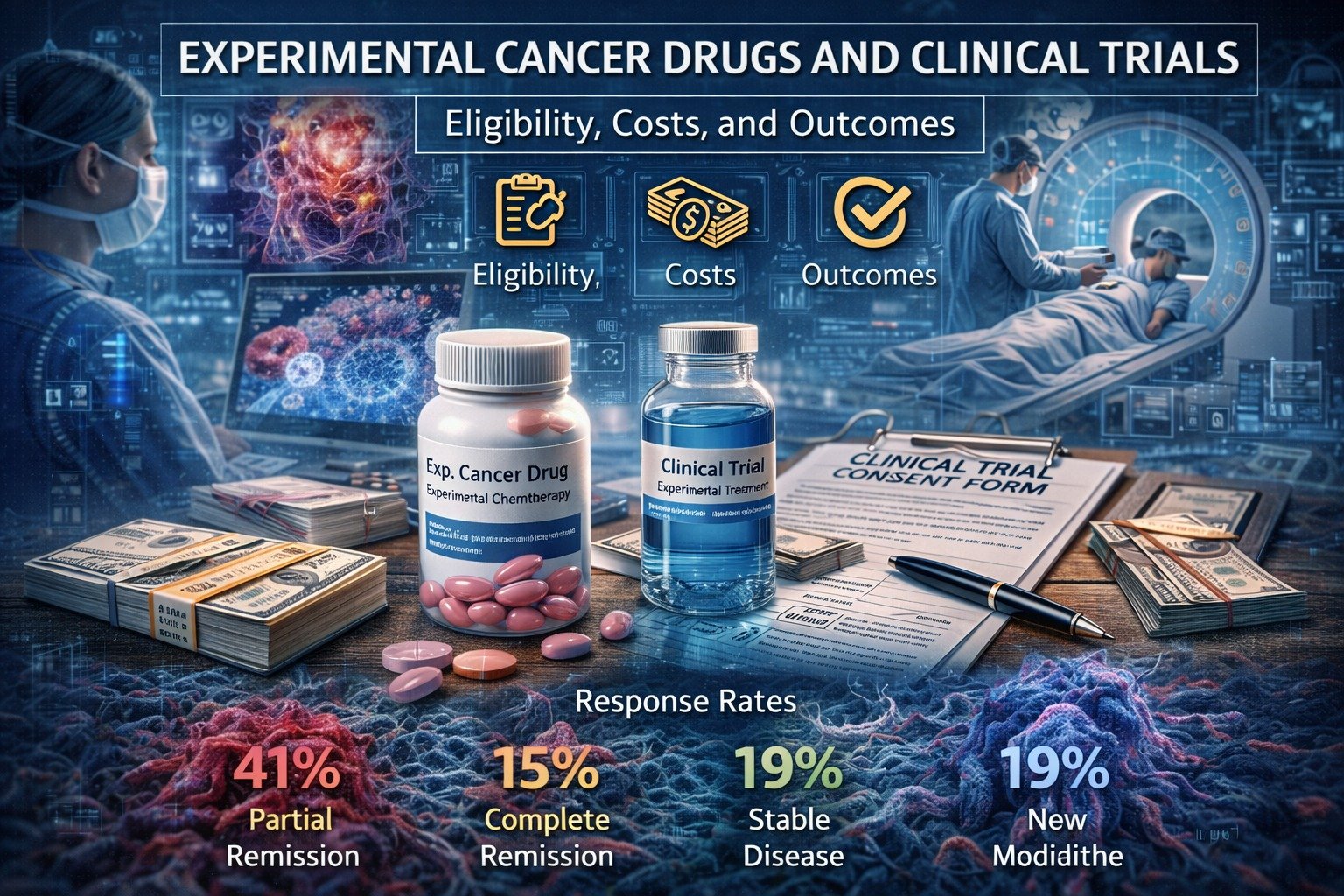
Not all participants benefit. Some experience no response. Others achieve durable remission unavailable through standard therapy. Trials trade certainty for possibility.
7. Risks and Limitations
Experimental drugs carry defined risks:
- Unknown side effects
- Limited long-term safety data
- Possibility of no therapeutic benefit
- Increased monitoring burden
Trials do not guarantee improvement. Participation is a calculated risk governed by informed consent.
8. Cost Structure and Financial Impact
Clinical trials reduce direct treatment costs but do not eliminate expense.
Typically covered:
- Experimental drug
- Trial-related testing
- Research monitoring
Typically not covered:
- Standard cancer care
- Travel and lodging
- Lost income
Total patient cost ranges from minimal to substantial depending on trial location and insurance coverage.
9. Key Features of Reputable Cancer Trials
Legitimate trials consistently include:
- Institutional review board approval
- Transparent risk disclosure
- Defined endpoints and protocols
- No patient payment for experimental drugs
- Independent data monitoring
Absence of these features indicates high risk and low credibility.
10. Frequently Asked Questions
Are experimental cancer drugs safe?
Safety is evaluated continuously, but unknown risks remain.
Do trials replace standard treatment?
Some trials do. Others supplement existing therapy.
Can late-stage patients enroll?
Yes, but eligibility depends on trial design.
Do trials improve survival?
Some do. Many do not. Data determines value.
Is enrollment voluntary?
Yes. Patients may withdraw at any time.






Leave a Reply