

Introduction
Mesothelioma is one of the most serious occupational diseases associated with industrial exposure. This aggressive cancer develops in the lining of the lungs, abdomen, or heart and is most commonly linked to asbestos exposure. For decades, asbestos was widely used in construction materials, shipbuilding, automotive components, insulation products, and industrial equipment because of its heat resistance and durability.
Unfortunately, prolonged exposure to asbestos fibers can cause severe respiratory illnesses, including mesothelioma, lung cancer, and asbestosis. Because these diseases may take 20 to 50 years to develop after exposure, many individuals are diagnosed long after they have left the workplaces where exposure occurred.
Over the past several decades, thousands of lawsuits have been filed against companies that manufactured or distributed asbestos-containing products. As litigation costs increased, many asbestos companies declared bankruptcy. In response, courts established asbestos trust funds to ensure that victims could still receive compensation even after companies reorganized under bankruptcy protection.
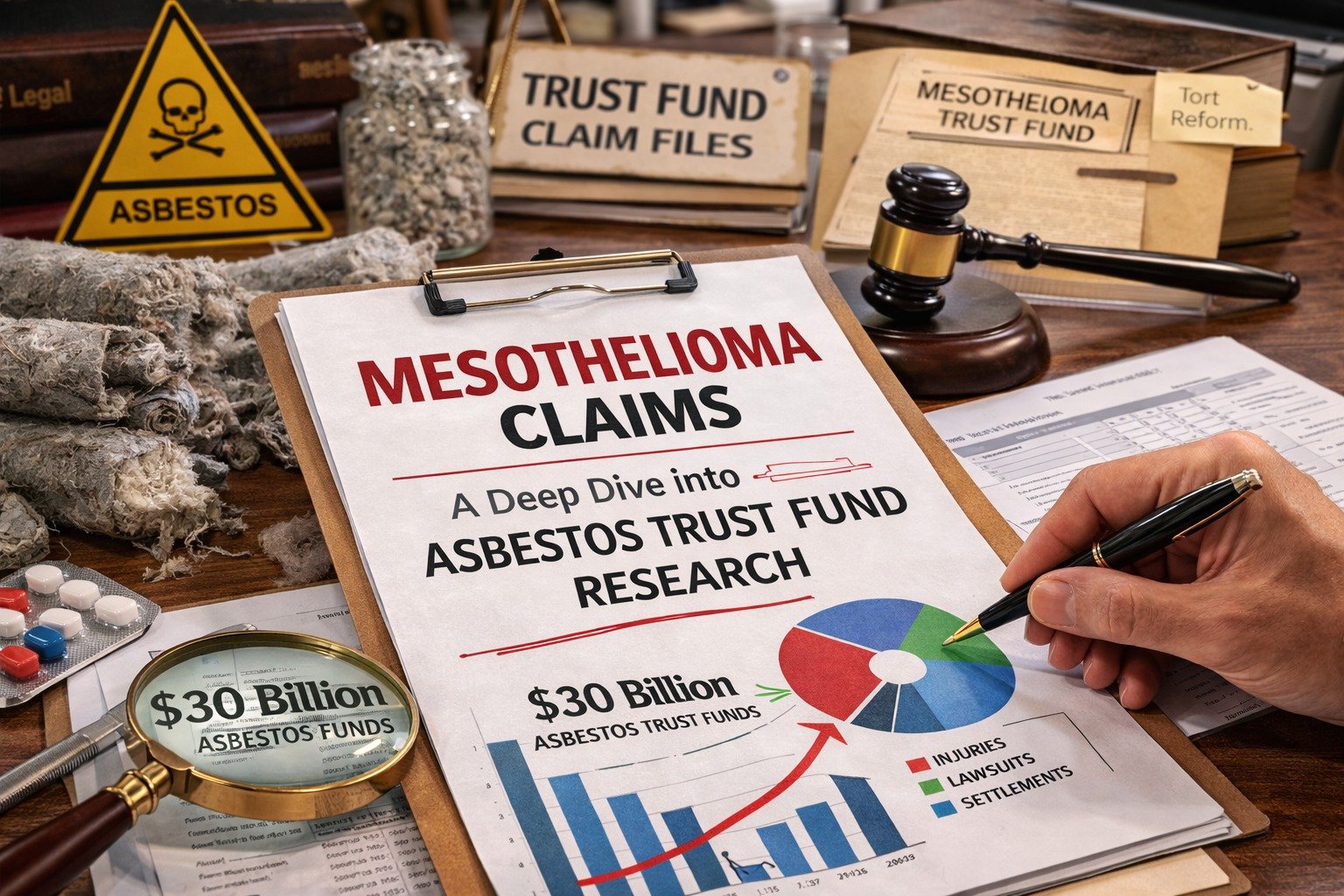
Today, asbestos trust funds represent one of the largest compensation systems for occupational disease victims. These funds collectively hold billions of dollars intended to compensate individuals diagnosed with mesothelioma and other asbestos-related illnesses.
This article provides an in-depth exploration of mesothelioma claims and asbestos trust fund research, examining how these funds were created, how victims file claims, and what legal factors influence compensation.
Understanding Mesothelioma and Asbestos Exposure
Mesothelioma is a rare but aggressive form of cancer that primarily affects the mesothelium, the protective lining surrounding internal organs.
The most common form is pleural mesothelioma, which develops in the lining of the lungs. Other types include:
- Peritoneal mesothelioma, affecting the abdominal lining
- Pericardial mesothelioma, affecting the lining around the heart
- Testicular mesothelioma, an extremely rare form
The disease is almost exclusively associated with exposure to asbestos fibers.
How Asbestos Causes Disease
Asbestos fibers are microscopic and easily inhaled or ingested. Once inside the body, these fibers can become lodged in tissue, causing chronic inflammation and cellular damage.
Over time, this damage may lead to the development of cancer.
Workers in industries such as construction, shipbuilding, insulation manufacturing, and mining historically faced the highest exposure risks.
Even family members of workers sometimes experienced secondary exposure through asbestos fibers brought home on clothing.
The History of Asbestos Litigation
Legal action against asbestos manufacturers began increasing significantly during the late twentieth century. Evidence revealed that many companies were aware of asbestos health risks but continued to manufacture products without providing adequate warnings.
As lawsuits multiplied, several companies faced enormous financial liability. To manage these claims while continuing operations, many corporations filed for bankruptcy protection.
Under U.S. bankruptcy law, companies could reorganize while establishing asbestos compensation trusts for current and future victims.
These trusts became the primary mechanism for compensating individuals harmed by asbestos exposure.
What Are Asbestos Trust Funds?
Asbestos trust funds are compensation systems created by companies that filed for bankruptcy due to asbestos-related liabilities.
These trusts are designed to:
- Provide compensation for victims diagnosed with asbestos-related diseases
- Ensure that future claimants receive financial recovery
- Allow companies to continue operating under bankruptcy protection
Courts require companies to fund these trusts with significant financial assets, which may include cash, stock, insurance policies, or other resources.
Today, dozens of asbestos trust funds exist, collectively holding tens of billions of dollars for victims.
How Asbestos Trust Funds Operate
Each asbestos trust operates independently but follows similar procedures for evaluating claims.
Trust Distribution Procedures
Trust funds use detailed guidelines known as Trust Distribution Procedures (TDPs) to determine compensation eligibility.
These guidelines typically specify:
- Medical criteria for diagnosis
- Evidence requirements for exposure
- Compensation payment schedules
- Claim review processes
TDPs ensure that claims are evaluated consistently across all applicants.
Types of Claims Filed with Asbestos Trusts
Individuals diagnosed with asbestos-related diseases may file different types of claims depending on their circumstances.
Mesothelioma Claims
Mesothelioma is considered the most severe asbestos-related illness. As a result, it often receives the highest compensation levels.
Lung Cancer Claims
Workers diagnosed with lung cancer linked to asbestos exposure may also qualify for compensation.
Asbestosis Claims
Asbestosis is a chronic lung disease caused by inhaling asbestos fibers. While serious, it typically receives lower compensation compared to mesothelioma.
Secondary Exposure Claims
Family members exposed to asbestos through contaminated clothing or household exposure may also file claims in certain cases.
Evidence Required for Mesothelioma Trust Claims
Successful asbestos trust claims require strong documentation supporting both medical diagnosis and exposure history.
Common evidence includes:
Medical Documentation
Claimants must provide medical records confirming a diagnosis of mesothelioma or another asbestos-related illness.
This may include:
- Pathology reports
- Imaging scans
- Physician statements
- Treatment records
Employment History
Claimants must demonstrate that they worked in environments where asbestos exposure occurred.
Employment documentation may include:
- Payroll records
- Union membership records
- Social Security work history
- Employer statements
Product Identification
Some claims require evidence linking exposure to specific asbestos-containing products manufactured by the responsible company.
Witness testimony or workplace documentation may support these claims.
Claim Review Processes
Asbestos trusts typically evaluate claims through one of two review methods.
Expedited Review
Expedited review provides faster claim processing for individuals who meet predetermined eligibility criteria.
These claims usually receive standardized compensation amounts.
Individual Review
Individual review allows claimants to present detailed evidence demonstrating that their claim may warrant higher compensation.
However, this process may take longer to complete.
Payment Percentages and Trust Compensation
Asbestos trusts must preserve funds for future claimants. To accomplish this, most trusts pay only a percentage of the claim’s total value.
For example, a mesothelioma claim valued at $200,000 might receive a payment percentage of 25 percent, resulting in a $50,000 payout.
Payment percentages vary by trust and may change over time depending on available resources and claim volume.
Filing Claims with Multiple Trust Funds
Many workers were exposed to asbestos products from multiple manufacturers. As a result, claimants may be eligible to file claims with multiple asbestos trusts.
For example, a construction worker exposed to insulation, cement, and industrial equipment may file claims against several different trust funds.
Each trust evaluates claims independently, potentially allowing claimants to receive compensation from multiple sources.
The Role of Attorneys in Mesothelioma Claims
Mesothelioma claims often involve complex research and documentation. Many claimants work with attorneys who specialize in asbestos litigation.
Legal professionals assist with:
- Investigating exposure history
- Identifying responsible manufacturers
- Gathering medical documentation
- Filing claims with multiple trusts
- Negotiating settlements
Because asbestos exposure often occurred decades earlier, legal research may involve historical employment records and product identification.
Statutes of Limitations
Mesothelioma claims must typically be filed within specific time limits known as statutes of limitations.
These deadlines vary by jurisdiction but often begin when the individual is diagnosed with the disease rather than when exposure occurred.
Because mesothelioma may develop decades after exposure, this rule ensures that victims still have the opportunity to seek compensation.
Mesothelioma Lawsuits vs. Trust Fund Claims
In some situations, victims may pursue both asbestos trust claims and traditional lawsuits.
Trust Fund Claims
Trust claims are usually processed faster and do not require courtroom trials.
Personal Injury Lawsuits
Victims may file lawsuits against companies that remain financially solvent and have not established trust funds.
Wrongful Death Claims
Family members may file claims if a victim dies from mesothelioma-related complications.
These legal pathways may sometimes operate simultaneously depending on the circumstances.
The Financial Impact of Mesothelioma
Mesothelioma treatment can be extremely expensive. Costs often include:
- Surgery
- Chemotherapy
- Radiation therapy
- Specialized cancer treatments
- Palliative care
- Travel for medical treatment
Additionally, patients may experience loss of income due to illness or inability to work.
Compensation from asbestos trusts helps offset these financial burdens.
Researching Asbestos Exposure
One of the most important steps in filing a mesothelioma claim is identifying where asbestos exposure occurred.
Common exposure sites include:
- Shipyards
- Construction sites
- Power plants
- Factories
- Military bases
- Oil refineries
Researchers often rely on historical industry records to identify products used at specific workplaces.
Some legal databases track asbestos-containing products used by particular manufacturers and job sites.
Challenges in Asbestos Trust Claims
Although trust funds provide an important compensation pathway, claimants may face several challenges.
Exposure Documentation
Because exposure may have occurred decades earlier, obtaining accurate records can be difficult.
Multiple Claim Requirements
Each trust has its own documentation and eligibility rules.
Changing Payment Percentages
Trust funds periodically adjust compensation percentages depending on financial resources.
Despite these challenges, trust funds remain one of the most effective mechanisms for compensating asbestos victims.
The Future of Asbestos Litigation
Although asbestos use has declined significantly in many countries, legal claims continue to emerge due to the long latency period of asbestos-related diseases.
Experts expect mesothelioma claims to continue for decades because exposure occurred widely throughout the twentieth century.
Future developments may include:
- Improved medical treatments for mesothelioma
- Expanded compensation programs for victims
- Greater regulatory restrictions on asbestos products
Continued research and legal oversight remain essential for protecting workers and supporting affected individuals.
Conclusion
Mesothelioma claims represent one of the most significant areas of occupational disease litigation. The creation of asbestos trust funds has provided an essential compensation system for individuals diagnosed with asbestos-related illnesses, ensuring that victims can seek financial recovery even after responsible companies enter bankruptcy.
Filing a successful claim requires detailed research, including medical documentation, employment history, and evidence of asbestos exposure. While the process can be complex, asbestos trust funds have distributed billions of dollars to individuals harmed by asbestos products.
As legal systems continue addressing the long-term consequences of asbestos exposure, trust funds will remain a critical mechanism for supporting victims and holding manufacturers accountable.
Understanding how these claims work helps researchers, legal professionals, and affected families navigate the compensation process while highlighting the lasting impact of industrial asbestos use.











Leave a Reply