

Introduction
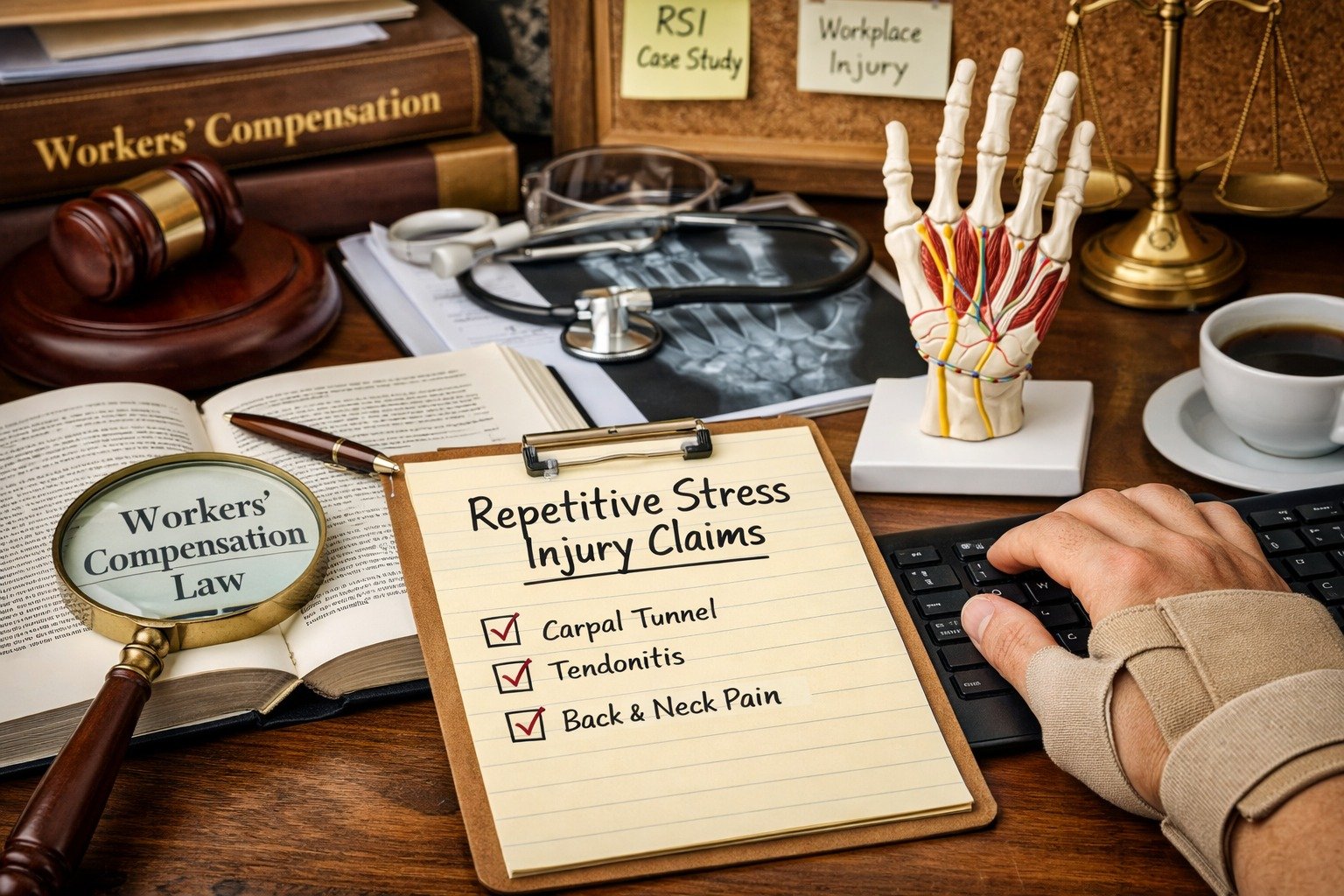
Workplace injuries are often associated with sudden accidents such as falls, machinery malfunctions, or vehicle crashes. However, not all workplace injuries occur instantly. Many develop slowly over time through repeated physical strain or prolonged exposure to certain working conditions. These injuries are commonly known as repetitive stress injuries (RSIs) or repetitive strain injuries, and they represent a significant portion of workers’ compensation claims in modern workplaces.
Repetitive stress injuries occur when muscles, tendons, nerves, and joints are subjected to repeated movements or sustained pressure over extended periods. Unlike traumatic injuries, RSIs often develop gradually, making them harder to diagnose and more complicated to prove in legal claims.
As workplaces become increasingly technology-driven and task-oriented, repetitive stress injuries are becoming more common across industries ranging from manufacturing and healthcare to office environments and logistics. Workers who type continuously, lift objects regularly, perform repetitive assembly tasks, or maintain awkward body positions for long periods may be at risk.
Because these injuries develop gradually and are sometimes difficult to attribute to a single incident, they often raise complex legal questions within workers’ compensation systems. Employers, insurers, and employees may disagree about whether the injury is truly work-related or caused by outside factors.
This article explores the legal framework surrounding repetitive stress injury claims, including how workers’ compensation systems handle these cases, how employees can research and support their claims, and what legal challenges often arise in RSI-related disputes.
Understanding Repetitive Stress Injuries
Repetitive stress injuries are physical conditions caused by repeated motions, sustained pressure, or prolonged awkward postures. Over time, these repetitive activities place stress on specific body parts, leading to inflammation, nerve compression, or tissue damage.
Common repetitive stress injuries include:
- Carpal tunnel syndrome
- Tendonitis
- Bursitis
- Rotator cuff injuries
- Tennis elbow (lateral epicondylitis)
- Trigger finger
- Chronic back strain
- Cubital tunnel syndrome
- Thoracic outlet syndrome
These injuries frequently affect areas such as the hands, wrists, elbows, shoulders, neck, and lower back.
RSIs are particularly common in occupations involving repetitive tasks, including:
- Office and administrative work
- Manufacturing and assembly line work
- Construction and manual labor
- Healthcare and nursing
- Warehouse and logistics operations
- Food processing and packaging
- Retail work involving repetitive lifting
The gradual nature of these injuries often makes early symptoms easy to ignore until the condition becomes severe.
The Role of Workers’ Compensation
Workers’ compensation is a legal system designed to provide financial support and medical coverage for employees who suffer work-related injuries or illnesses. In most jurisdictions, workers’ compensation laws require employers to carry insurance that covers workplace injuries regardless of who was at fault.
Typical workers’ compensation benefits may include:
- Medical treatment coverage
- Wage replacement for lost income
- Rehabilitation services
- Disability benefits
- Compensation for permanent impairment
In exchange for receiving workers’ compensation benefits, employees usually give up the right to sue their employer directly for workplace injuries.
However, repetitive stress injury claims often present unique legal challenges compared to traditional workplace accidents.
Why RSI Claims Are Legally Complex
Repetitive stress injury claims can be more difficult to prove than injuries caused by a single workplace incident. Several factors contribute to this complexity.
Gradual Onset
Unlike accidents that occur at a specific time and place, RSIs develop over weeks, months, or even years. Determining when the injury began and what caused it can be difficult.
Multiple Potential Causes
Employers or insurance companies may argue that the injury was caused by non-work activities such as hobbies, sports, or household tasks.
Medical Evidence Requirements
Workers must often provide medical documentation demonstrating that repetitive workplace activities contributed significantly to the injury.
Preexisting Conditions
If a worker had a previous medical condition affecting the same body part, insurers may claim that the injury was not work-related.
Because of these issues, legal research and documentation play an essential role in supporting RSI claims.
Legal Standards for Repetitive Stress Injury Claims
Although workers’ compensation laws vary by jurisdiction, most systems require claimants to prove several key elements.
Work-Related Causation
Employees must demonstrate that their job duties contributed significantly to the injury. Medical experts often evaluate the relationship between work activities and the condition.
Occupational Exposure
The worker must show that repetitive activities were part of their job duties.
Medical Diagnosis
A qualified medical professional must diagnose the injury and confirm that it is consistent with repetitive stress.
Timely Reporting
Many workers’ compensation systems require employees to report injuries within a specific time frame after symptoms appear.
Failure to meet these requirements can lead to claim denials.
Common Legal Disputes in RSI Claims
Repetitive stress injury claims frequently involve disputes between employees and insurance providers. Some common areas of disagreement include:
Disputed Causation
Insurance companies may argue that the injury was caused by personal activities rather than workplace tasks.
Insufficient Medical Evidence
Claims may be denied if medical reports do not clearly connect the injury to work-related activities.
Late Reporting
If an employee waits too long to report symptoms, insurers may question whether the injury is work-related.
Employment Classification Issues
Independent contractors may not be eligible for workers’ compensation benefits in certain jurisdictions.
These disputes often require detailed documentation and legal analysis.
Researching Repetitive Stress Injury Claims
Employees pursuing RSI claims can strengthen their case by conducting thorough research and gathering relevant evidence.
Reviewing Workplace Duties
Workers should document the tasks they perform daily, including:
- Repetitive movements
- Duration of tasks
- Frequency of activity
- Physical strain involved
This information can help establish the connection between job duties and the injury.
Gathering Medical Records
Medical documentation is crucial in RSI claims. Workers should collect:
- Diagnostic test results
- Physician evaluations
- Treatment records
- Specialist reports
These records help demonstrate the severity and cause of the injury.
Studying Workplace Safety Guidelines
Government occupational safety agencies often publish guidelines related to ergonomics and repetitive motion injuries. Reviewing these guidelines can help determine whether workplace practices contributed to the injury.
Examining Previous Legal Cases
Researching past workers’ compensation decisions involving repetitive stress injuries may reveal patterns in how courts evaluate similar claims.
Legal databases and public court records often contain case summaries that provide insight into successful claims.
The Importance of Ergonomics in Workplace Injury Prevention
Ergonomics refers to the design of work environments that minimize physical strain and reduce injury risks.
Employers may implement ergonomic practices such as:
- Adjustable chairs and desks
- Proper keyboard placement
- Mechanical lifting equipment
- Scheduled rest breaks
- Job rotation to reduce repetitive tasks
Failure to provide safe working conditions may strengthen an employee’s claim that workplace practices contributed to an injury.
Medical Evaluation in RSI Claims
Medical professionals play a critical role in workers’ compensation claims involving repetitive stress injuries.
Doctors may conduct several types of evaluations, including:
- Physical examinations
- Nerve conduction studies
- MRI or ultrasound imaging
- Range-of-motion assessments
- Functional capacity evaluations
Medical experts may also analyze the worker’s job duties to determine whether repetitive tasks contributed to the injury.
Expert testimony often plays a decisive role in legal proceedings.
Workers’ Compensation Benefits for RSI Claims
If a repetitive stress injury claim is approved, workers may receive several types of benefits.
Medical Coverage
Workers’ compensation typically covers:
- Doctor visits
- Physical therapy
- Surgery if necessary
- Prescription medications
- Assistive devices
Temporary Disability Benefits
Employees unable to work during recovery may receive partial wage replacement.
Permanent Disability Compensation
If the injury causes lasting impairment, workers may qualify for permanent disability benefits.
Vocational Rehabilitation
Some workers may receive training or support for transitioning into alternative jobs if they cannot return to their previous role.
Employer Responsibilities
Employers have legal obligations to maintain safe working environments and address potential injury risks.
These responsibilities may include:
- Conducting ergonomic assessments
- Providing safety training
- Monitoring workplace injury reports
- Implementing injury prevention programs
Failure to address repetitive strain risks may expose employers to legal and regulatory consequences.
Insurance Company Investigations
Insurance companies often investigate RSI claims carefully because these cases can involve long-term medical expenses.
Investigations may include:
- Reviewing medical records
- Interviewing supervisors
- Observing workplace tasks
- Conducting independent medical examinations
Employees should be aware that insurers may attempt to identify inconsistencies in injury reports.
Long-Term Impact of Repetitive Stress Injuries
Repetitive stress injuries can have lasting effects on workers’ health and employment opportunities.
Some individuals may experience:
- Chronic pain
- Reduced mobility
- Permanent nerve damage
- Difficulty performing physical tasks
- Limited career options
These long-term consequences highlight the importance of early diagnosis and treatment.
Preventing Repetitive Stress Injuries
Prevention strategies play an essential role in reducing workplace injury rates.
Employers and workers can adopt several practices to minimize risks:
- Maintaining proper posture
- Using ergonomic equipment
- Taking regular breaks
- Alternating tasks throughout the day
- Participating in workplace safety training
Early reporting of symptoms also helps prevent minor injuries from becoming severe conditions.
The Future of RSI Claims in Modern Workplaces
As workplace technology evolves, repetitive stress injuries may take new forms.
For example:
- Increased computer usage may lead to more wrist and neck injuries.
- Automated manufacturing processes may still require repetitive monitoring tasks.
- Remote work environments may create ergonomic challenges in home offices.
Legal frameworks for workers’ compensation will likely continue evolving to address these changing workplace conditions.
Conclusion
Repetitive stress injuries represent a growing concern in modern workplaces. Unlike sudden accidents, these injuries develop gradually through repeated strain, making them more difficult to diagnose and prove in workers’ compensation claims.
Legal research plays a crucial role in supporting RSI claims by helping employees understand workers’ compensation laws, gather medical evidence, and document workplace conditions.
Although repetitive stress injury claims can be complex, workers’ compensation systems exist to protect employees who suffer work-related injuries and illnesses. By understanding legal requirements and conducting thorough research, injured workers can better navigate the claims process and pursue the benefits they deserve.
As workplace environments continue to evolve, ensuring safe working conditions and effective injury prevention strategies will remain essential for protecting employee health and reducing legal disputes related to repetitive strain injuries.










Leave a Reply