

Introduction
Large commercial trucks are essential to modern economies. Every day, tractor-trailers transport goods across highways, connecting manufacturers, retailers, and consumers. However, when these massive vehicles are involved in traffic accidents, the consequences are often far more severe than ordinary car crashes.
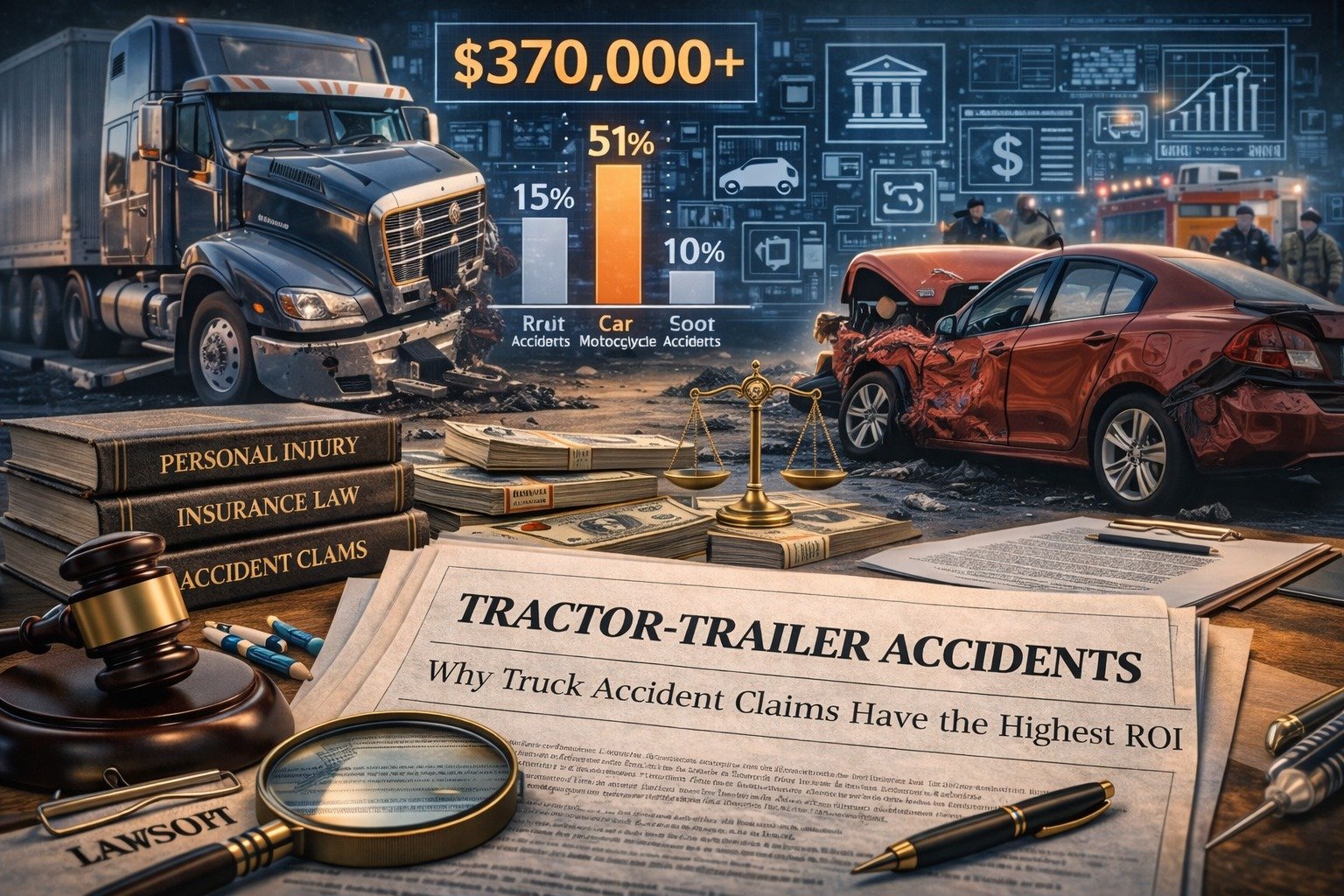
Tractor-trailer accidents frequently result in catastrophic injuries, extensive property damage, and complex legal disputes. Because of the high stakes involved, truck accident claims often generate some of the largest settlements in personal injury law. Legal professionals sometimes describe these cases as having the highest return on investment (ROI) among personal injury claims due to the large potential compensation amounts and the insurance coverage typically involved.
Understanding why truck accident claims produce such significant settlements requires examining the unique factors surrounding commercial trucking, federal regulations, corporate liability, and the severe injuries that often result from these crashes.
This article explores the legal and financial aspects of tractor-trailer accident claims, explains why these cases often lead to high compensation payouts, and outlines the key factors that influence settlement outcomes.
Understanding Tractor-Trailer Accidents
Tractor-trailers, often referred to as semi-trucks or 18-wheelers, are significantly larger and heavier than standard passenger vehicles. A fully loaded commercial truck can weigh up to 80,000 pounds, compared to approximately 4,000 pounds for a typical car.
Because of this size difference, collisions between trucks and smaller vehicles often result in severe damage.
Common types of truck accidents include:
- Rear-end collisions
- Jackknife accidents
- Rollover crashes
- Underride accidents
- Blind-spot collisions
- Tire blowouts leading to loss of control
These accidents frequently occur on highways and major transportation routes where commercial trucks operate.
Why Truck Accidents Are More Severe
Truck accidents tend to cause more serious injuries than typical car accidents for several reasons.
Size and Weight Differences
The massive size of commercial trucks creates significant impact forces during collisions.
Longer Stopping Distances
Large trucks require more time and distance to stop compared to passenger vehicles.
High-Speed Highway Travel
Many truck accidents occur on highways where vehicles travel at high speeds.
Cargo Hazards
Improperly secured cargo can shift during transport, causing trucks to lose balance or spill hazardous materials.
Because of these factors, truck accidents often lead to catastrophic injuries and large financial losses.
Common Causes of Tractor-Trailer Accidents
Several factors contribute to truck accidents, many of which involve driver error or industry pressures.
Driver Fatigue
Truck drivers often work long hours and may become fatigued while operating their vehicles.
Distracted Driving
Using phones, navigation devices, or other distractions can reduce driver awareness.
Improper Vehicle Maintenance
Mechanical failures such as brake problems or tire blowouts can lead to accidents.
Speeding or Reckless Driving
Drivers attempting to meet tight delivery deadlines may exceed safe speed limits.
Improper Cargo Loading
Unbalanced or overloaded cargo can affect vehicle stability.
Understanding the cause of a truck accident is essential for determining liability in legal claims.
Why Truck Accident Claims Have High ROI
Truck accident cases often produce larger settlements than other personal injury claims. Several factors contribute to this trend.
Higher Insurance Coverage
Commercial trucking companies are required to carry significantly higher insurance coverage than ordinary drivers.
Federal regulations often require trucking companies to maintain liability insurance policies of $750,000 to several million dollars, depending on the type of cargo transported.
This higher coverage increases the potential compensation available in accident claims.
Severe Injuries and Medical Costs
Because truck accidents frequently involve catastrophic injuries, victims often require extensive medical treatment.
These costs may include:
- Emergency medical care
- Surgery
- Rehabilitation therapy
- Long-term medical care
- Assistive medical equipment
Higher medical expenses lead to larger settlement amounts.
Corporate Liability
Truck accident claims often involve multiple parties, including:
- Truck drivers
- Trucking companies
- Vehicle manufacturers
- Cargo loading companies
- Maintenance contractors
Because companies rather than individuals are frequently responsible, there may be greater financial resources available to compensate victims.
Federal Trucking Regulations
Commercial trucking is regulated by federal agencies that enforce safety rules designed to prevent accidents.
Key regulations include:
Hours-of-Service Rules
These rules limit how long truck drivers can operate vehicles without rest.
Vehicle Inspection Requirements
Trucking companies must regularly inspect and maintain vehicles.
Driver Qualification Standards
Commercial drivers must meet licensing and training requirements.
Cargo Securement Regulations
Companies must ensure that cargo is properly loaded and balanced.
Violations of these regulations can serve as evidence of negligence in truck accident lawsuits.
Types of Injuries in Truck Accidents
Truck accidents often cause serious injuries due to the force of impact.
Common injuries include:
Traumatic Brain Injuries
Head injuries may result from violent collisions.
Spinal Cord Injuries
Damage to the spine can lead to partial or complete paralysis.
Internal Organ Damage
High-impact crashes can cause internal bleeding and organ trauma.
Broken Bones
Severe fractures often occur during truck collisions.
Burn Injuries
Fuel leaks and fires may cause serious burns.
Because these injuries may require lifelong medical care, settlement amounts in truck accident cases are often substantial.
Calculating Compensation in Truck Accident Claims
Several types of damages may be included in truck accident settlements.
Economic Damages
These damages cover measurable financial losses, including:
- Medical expenses
- Lost wages
- Property damage
- Future medical costs
Non-Economic Damages
These damages compensate victims for intangible losses such as:
- Pain and suffering
- Emotional distress
- Loss of quality of life
Punitive Damages
In cases involving extreme negligence or reckless behavior, courts may award punitive damages intended to punish the responsible party.
Investigating Truck Accident Claims
Truck accident investigations are often more complex than standard car accident investigations.
Key evidence may include:
- Electronic logging devices that track driver hours
- Vehicle “black box” data
- Maintenance records
- Driver employment records
- Cargo loading documentation
- Surveillance or dash camera footage
Attorneys and investigators analyze this evidence to determine how the accident occurred and who is responsible.
The Role of Personal Injury Lawyers
Truck accident victims often seek legal representation due to the complexity of these cases.
Personal injury attorneys assist with:
- Conducting accident investigations
- Gathering evidence
- Negotiating with insurance companies
- Filing lawsuits if necessary
Because trucking companies typically have strong legal teams defending them, experienced representation is often essential for victims pursuing compensation.
Settlement vs. Trial in Truck Accident Cases
Many truck accident claims are resolved through settlements before reaching trial.
Settlements offer several advantages:
- Faster resolution of claims
- Reduced legal costs
- Greater certainty of compensation
However, if parties cannot reach an agreement, cases may proceed to court where a judge or jury determines the final compensation amount.
Large verdicts in truck accident trials have sometimes exceeded millions of dollars.
Technology and Truck Accident Evidence
Modern technology plays an increasingly important role in truck accident investigations.
Commercial trucks often contain electronic systems that record important data, including:
- Vehicle speed
- Braking activity
- Steering inputs
- Driver hours of operation
This information can provide valuable insights into the events leading up to a crash.
Advances in vehicle technology may improve accident analysis and help determine liability more accurately.
Preventing Tractor-Trailer Accidents
While accidents cannot always be avoided, several safety practices can reduce the risk of truck crashes.
Improved Driver Training
Proper training helps drivers operate large vehicles safely.
Regular Vehicle Maintenance
Routine inspections reduce the risk of mechanical failures.
Fatigue Management
Monitoring driver hours helps prevent fatigue-related accidents.
Advanced Safety Technologies
Modern trucks may include safety features such as collision warning systems and automatic braking.
These measures aim to improve road safety for both truck drivers and passenger vehicles.
Future Trends in Truck Accident Litigation
The legal landscape surrounding truck accident claims may evolve as technology and transportation systems change.
Autonomous Trucking
Self-driving truck technology may shift liability from drivers to manufacturers or software developers.
Enhanced Data Collection
Advanced telematics systems will provide more detailed accident data.
Increased Insurance Requirements
Regulators may require higher insurance coverage limits for commercial trucking companies.
These developments could influence how truck accident cases are handled in the future.
Conclusion
Tractor-trailer accidents represent some of the most serious and financially significant cases in personal injury law. Because of the massive size of commercial trucks, the severity of injuries involved, and the high insurance coverage required for trucking companies, these cases often result in substantial settlements.
Truck accident claims typically have high ROI for victims and legal professionals due to the combination of catastrophic damages, corporate liability, and complex regulatory violations that may be involved.
However, pursuing compensation in these cases requires thorough investigation, legal expertise, and strong evidence demonstrating negligence.
As commercial transportation continues to play a central role in modern economies, ensuring safety on highways and holding negligent parties accountable will remain essential for protecting drivers and improving road safety.







Leave a Reply