

Table of Contents
- Introduction: The 2026 Healthcare Billing Shift
- Understanding the IDR Process
- The 72-Hour Transparency Rule
- 3 Steps to Winning a Medical Billing Settlement
- 1. Audit the EO
- 2. Request an Itemized Bill
- 3.File for Federal IDR
- Why Legal Research Matters
- Frequently Asked Questions (FAQs)
Introduction: The 2026 Healthcare Billing Shift
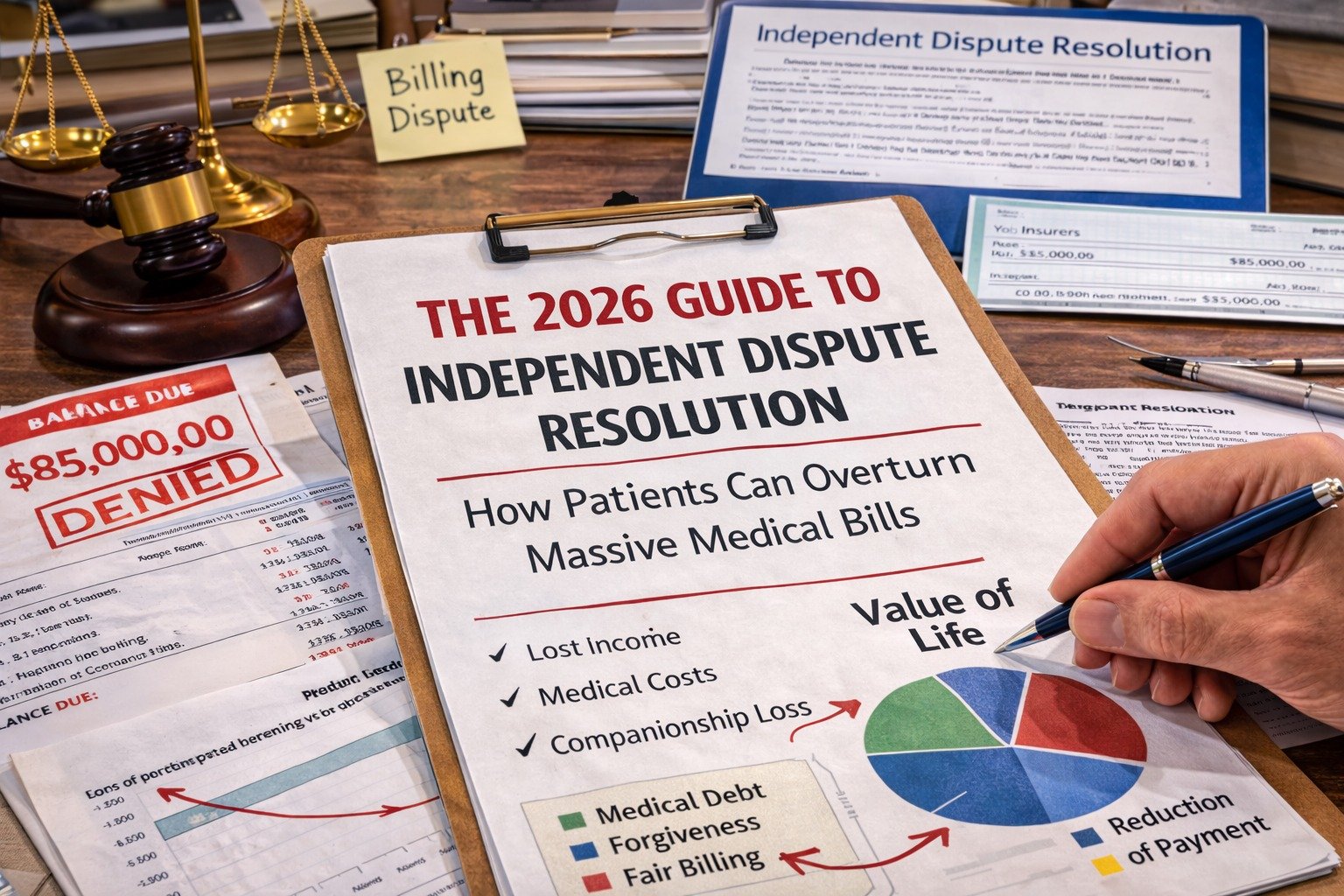
In 2026, the landscape of healthcare billing has shifted. With the full implementation of the No Surprises Act and the emergence of Independent Dispute Resolution (IDR), patients no longer have to accept a “final” medical bill as the final word. If you are facing a massive bill from an out-of-network provider or a facility fee you didn’t expect, you have legal rights to a settlement.
Understanding the IDR Process
The Independent Dispute Resolution process is a legal mechanism where a neutral third party decides the fair price for a medical service. Instead of the hospital’s “list price,” the settlement is usually based on the Qualifying Payment Amount (QPA)—the median rate an insurance company pays for that specific service in your local area.
The 72-Hour Transparency Rule
Under current 2026 CMS guidelines, hospitals must provide a “Good Faith Estimate” at least 72 hours before a scheduled procedure. If the final bill is more than $400 higher than that estimate, you are automatically eligible to trigger a dispute. This is the most powerful tool in your legal arsenal for securing a settlement.
3 Steps to Winning a Medical Billing Settlement
1. Audit the “Explanation of Benefits” (EOB): Look for “upcoding,” where a provider bills for a more expensive service than what was actually performed.
2. Request a “Consumer-Friendly” Itemized Bill: By law, facilities must provide a bill that is easy to read and free of complex medical jargon. Failure to do so can weaken their legal standing during a dispute.
3. File for Federal IDR: If internal appeals fail, you can move your case to the federal portal. At this stage, many hospitals choose to settle for a lower amount rather than pay the administrative fees associated with the arbitration process.
Why Legal Research Matters
Settling a medical debt isn’t just about the money; it’s about protecting your credit score and financial future. By staying informed about your 2026 healthcare rights, you can navigate the complex system with confidence.





Leave a Reply