

Table of Contents
- Global Overview of Organ Transplantation
- Why Organ Transplant Costs Vary by Country
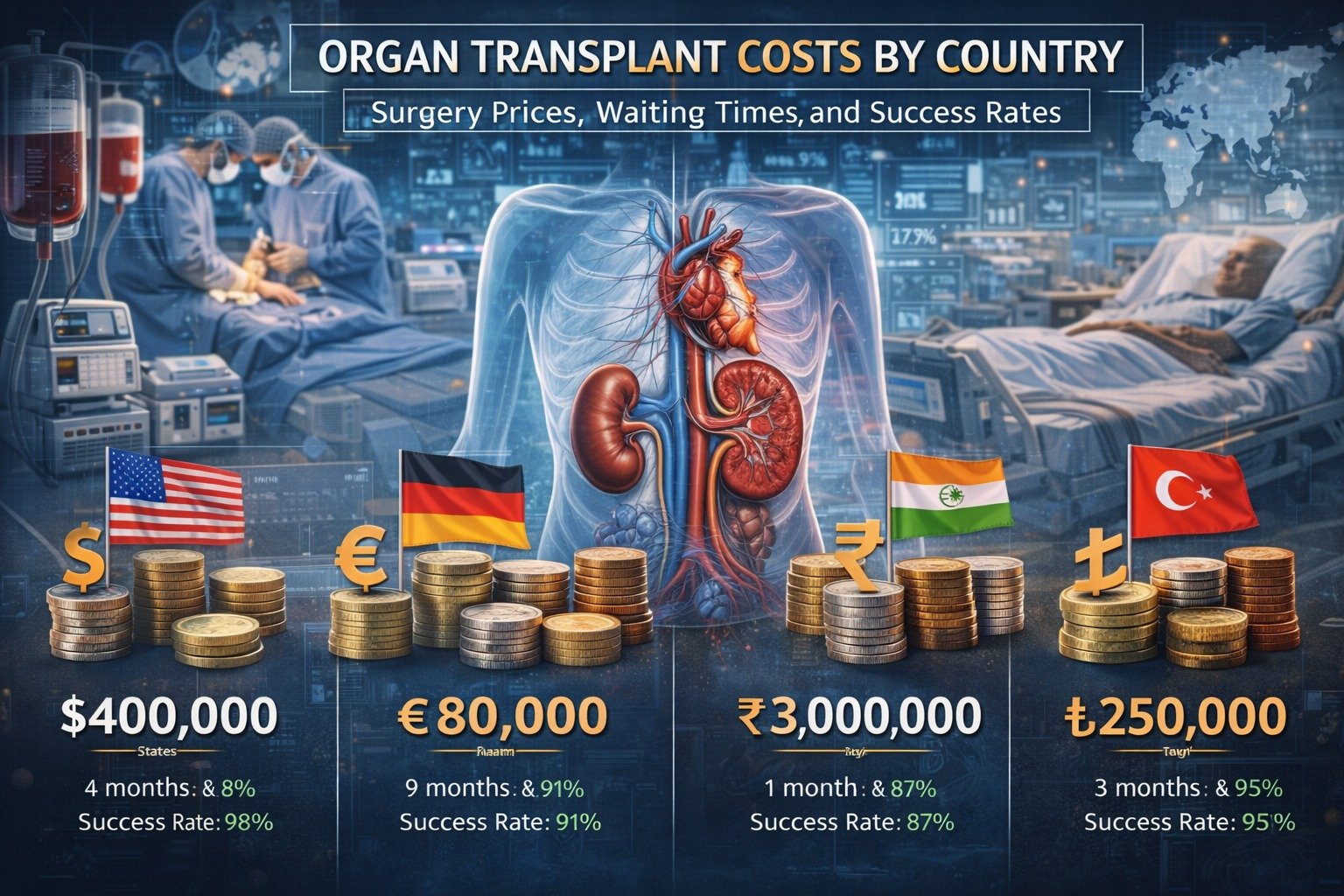
- Average Organ Transplant Costs by Country
- Waiting Times for Organ Transplants
- Success Rates and Outcome Differences
- Hidden and Long-Term Transplant Costs
- Medical Tourism for Organ Transplants
- Ethical and Legal Considerations
- Key Features of High-Quality Transplant Centers
- Frequently Asked Questions
1. Global Overview of Organ Transplantation
Organ transplantation is a life-saving procedure for patients with end-stage organ failure. Kidneys, livers, hearts, and lungs are the most commonly transplanted organs worldwide. Demand significantly exceeds supply, creating long waiting lists and driving patients to explore international treatment options. Cost, availability, and outcomes vary sharply by country.
2. Why Organ Transplant Costs Vary by Country
Transplant costs differ due to multiple structural factors:
- National healthcare funding models
- Surgeon and hospital labor costs
- Medication and immunosuppressant pricing
- Organ procurement systems
- Post-operative care standards
- Legal and regulatory frameworks
Countries with public healthcare systems subsidize costs, while private systems shift expenses to patients.
3. Average Organ Transplant Costs by Country
Approximate cost ranges for kidney transplants:
- United States: $300,000–$450,000
- United Kingdom: $90,000–$150,000
- Germany: $120,000–$180,000
- India: $30,000–$50,000
- Turkey: $40,000–$70,000
- Thailand: $45,000–$80,000
Liver and heart transplants cost significantly more, often exceeding $500,000 in high-income countries.
4. Waiting Times for Organ Transplants
Waiting times vary more than cost.
Average kidney transplant wait times:
- United States: 3–5 years
- United Kingdom: 2–3 years
- Germany: 6–8 years
- India: Weeks to months (living donor dominant)
- Turkey: Months
- Thailand: Months
Long waits increase mortality risk and overall healthcare costs.
5. Success Rates and Outcome Differences
Success rates depend on center volume, donor quality, and post-operative care.
Average one-year survival rates:
- Kidney transplant: 95–98%
- Liver transplant: 85–90%
- Heart transplant: 85–90%
High-volume centers consistently outperform low-volume hospitals regardless of country.
6. Hidden and Long-Term Transplant Costs
Initial surgery costs represent only part of total expense.
Ongoing costs include:
- Lifelong immunosuppressive medication
- Infection monitoring and treatment
- Follow-up testing and imaging
- Hospital readmissions
- Travel and accommodation for follow-up care
Lifetime post-transplant care can exceed surgery cost.
7. Medical Tourism for Organ Transplants
Lower costs and shorter waits drive transplant tourism. Risks include inconsistent regulation, limited legal recourse, and post-operative continuity gaps. Patients returning home often face complications without local specialist support. Cost savings may be offset by long-term medical risk.
8. Ethical and Legal Considerations
Organ transplantation is tightly regulated to prevent exploitation.
Critical issues include:
- Illegal organ trade
- Coerced or compensated donors
- Lack of informed consent
- Cross-border legal enforcement limitations
Patients bear responsibility for verifying ethical compliance before pursuing overseas transplantation.
9. Key Features of High-Quality Transplant Centers
Reliable transplant centers demonstrate:
- High annual transplant volume
- Transparent outcome reporting
- Multidisciplinary transplant teams
- Dedicated transplant ICU units
- Long-term patient monitoring systems
Cost without quality increases mortality risk.
10. Frequently Asked Questions
Why are organ transplants so expensive?
They involve complex surgery, lifelong medication, and intensive monitoring.
Is transplant surgery cheaper outside the U.S.?
Yes, but lower cost does not guarantee equivalent safety or outcomes.
Are success rates lower in low-cost countries?
Not necessarily. High-volume centers often achieve comparable results.
Do costs include donor expenses?
Often no. Donor evaluation and care may be billed separately.
Is post-transplant care mandatory?
Yes. Lifelong follow-up is required to prevent organ rejection.







Leave a Reply