

Table of Contents
- Cancer Treatment and Insurance Reality
- Types of Health Insurance Plans
- What Cancer Treatments Insurance Covers
- Common Coverage Gaps and Exclusions
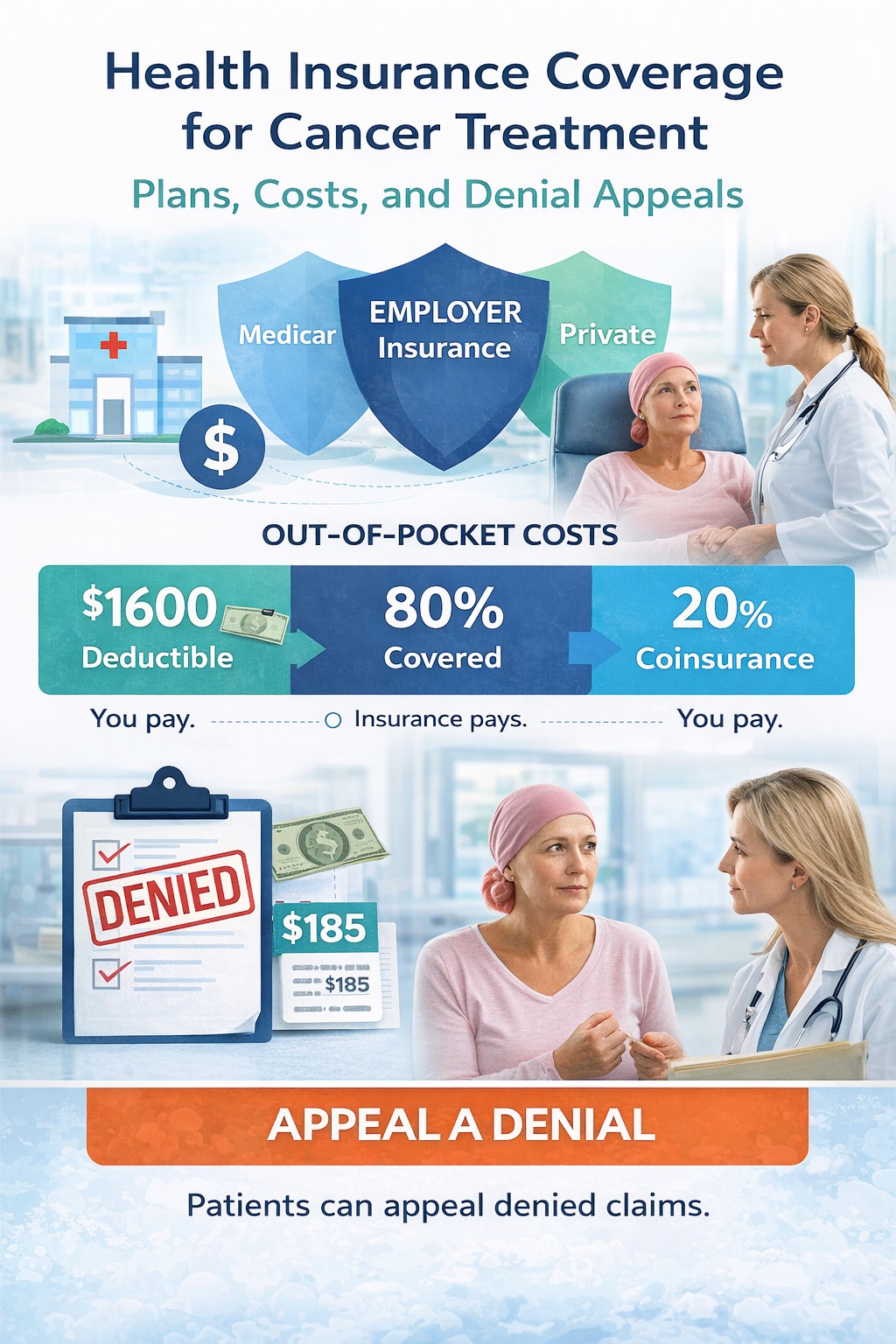
- Out-of-Pocket Costs for Cancer Patients
- Prior Authorization and Medical Necessity
- Insurance Denials in Cancer Care
- How Cancer Treatment Appeals Work
- Key Features of Strong Cancer Insurance Plans
- Frequently Asked Questions
1. Cancer Treatment and Insurance Reality
Cancer treatment is prolonged, multi-phased, and expensive. Insurance coverage determines whether patients access optimal care or face treatment delays. Even comprehensive policies impose limits, cost-sharing, and administrative barriers. Understanding coverage structure directly impacts survival outcomes and financial stability.
2. Types of Health Insurance Plans
Cancer coverage varies by plan type:
- Employer-Sponsored Insurance: Broad coverage but strict network rules
- Private Individual Plans: Variable benefits, higher premiums
- Medicare: Covers most standard treatments with cost-sharing
- Medicaid: Limited provider access, state-dependent benefits
- Short-Term Plans: Often exclude cancer entirely
Plan design matters more than plan name.
3. What Cancer Treatments Insurance Covers
Most comprehensive plans cover:
- Diagnostic imaging and biopsies
- Cancer surgery
- Chemotherapy and infusion services
- Radiation therapy
- Hospitalization and ICU care
- Standard immunotherapy drugs
Coverage applies only to treatments deemed medically necessary and within policy guidelines.
4. Common Coverage Gaps and Exclusions
Insurance frequently excludes or restricts:
- Experimental or off-label treatments
- Certain oral chemotherapy drugs
- Out-of-network cancer centers
- Genetic testing beyond baseline panels
- Long-term supportive care
These gaps shift costs directly to patients.
5. Out-of-Pocket Costs for Cancer Patients
Even insured patients face significant expenses.
Typical annual out-of-pocket ranges:
- $5,000–$15,000 for early-stage cancer
- $20,000–$50,000+ for advanced or metastatic cancer
Costs include deductibles, coinsurance, copayments, travel, and uncovered medications.
6. Prior Authorization and Medical Necessity
Insurers require prior authorization before approving:
- Chemotherapy regimens
- Advanced imaging
- Immunotherapy
- Targeted therapies
Denials often occur when insurers dispute medical necessity rather than treatment effectiveness. Delays directly interrupt care timelines.
7. Insurance Denials in Cancer Care
Common denial reasons include:
- Treatment labeled experimental
- Insufficient documentation
- Out-of-network provider use
- Step-therapy requirements
- Coding or billing errors
Denials are administrative decisions, not medical judgments.
8. How Cancer Treatment Appeals Work
Appeals reverse many denials when executed correctly.
Appeal process includes:
- Formal denial review
- Physician justification letters
- Clinical evidence submission
- External independent review
Time-sensitive appeals prevent treatment interruption. Escalation increases approval probability.
9. Key Features of Strong Cancer Insurance Plans
Effective cancer coverage includes:
- Broad oncology provider networks
- Clear drug formularies
- Low coinsurance for specialty drugs
- Out-of-pocket maximum caps
- Streamlined authorization processes
Weak plans externalize cost and delay care.
10. Frequently Asked Questions
Does insurance cover all cancer treatments?
No. Coverage is limited to approved, medically necessary treatments.
Can insurance deny life-saving treatment?
Yes. Denials are common and require appeals.
Is immunotherapy always covered?
Only FDA-approved uses within policy criteria.
What happens if treatment is out-of-network?
Costs increase sharply or coverage is denied entirely.
Can appeals actually work?
Yes. A large percentage of cancer treatment denials are overturned





Leave a Reply