

Table of Contents
- Spinal Cord Injury Overview
- Common Causes of Spinal Cord Injuries
- Medical Treatment After a Spinal Cord Injury
- Lifetime Medical and Care Costs
- Economic and Non-Economic Damages
- Spinal Cord Injury Lawsuits Explained
- Settlement Values and Compensation Ranges
- Factors That Influence Case Value
- Long-Term Care Planning After Settlement
- Frequently Asked Questions
1. Spinal Cord Injury Overview
A spinal cord injury (SCI) results from damage to the spinal cord that disrupts communication between the brain and body. These injuries often lead to permanent loss of motor function, sensation, or both. Severity ranges from partial impairment to complete paralysis. SCI cases carry long-term medical, financial, and legal consequences due to lifelong care requirements.
2. Common Causes of Spinal Cord Injuries
Spinal cord injuries frequently occur due to preventable incidents, forming the basis for legal claims:
- Motor vehicle accidents
- Construction and workplace accidents
- Medical malpractice and surgical errors
- Slip and fall incidents
- Sports and recreational injuries
- Acts of violence
Negligence by individuals, employers, manufacturers, or medical professionals often triggers liability.
3. Medical Treatment After a Spinal Cord Injury
Treatment begins immediately after injury and continues indefinitely.
Acute Care
Emergency stabilization includes spinal immobilization, imaging, and surgical intervention to prevent further damage.
Surgery
Surgical procedures aim to decompress the spinal cord, stabilize vertebrae, and reduce secondary injury risks.
Rehabilitation
Long-term rehabilitation includes physical therapy, occupational therapy, respiratory therapy, and neurological care.
Ongoing Medical Needs
Patients often require medications, assistive devices, home modifications, and routine specialist visits.
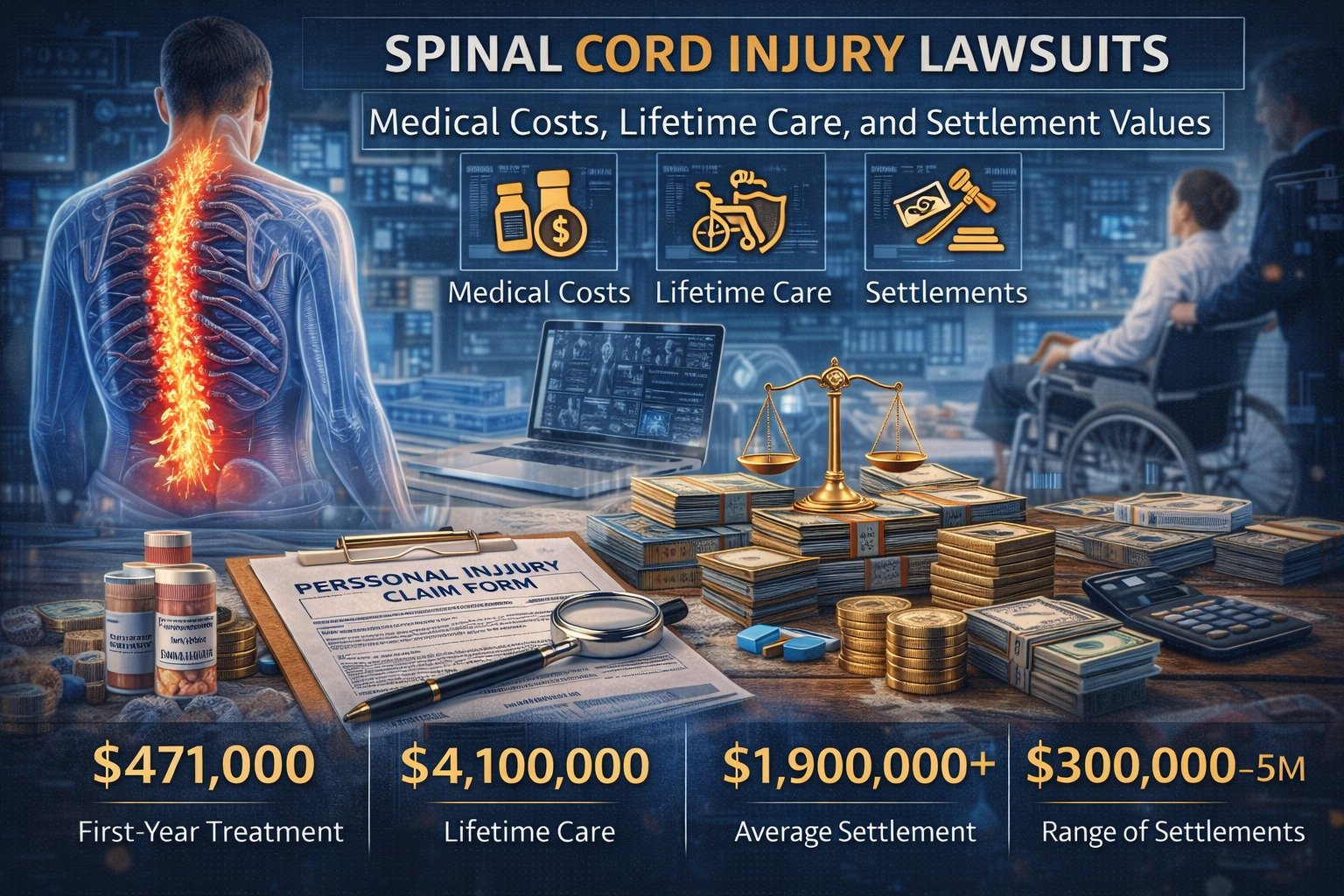
4. Lifetime Medical and Care Costs
Spinal cord injuries are among the most expensive medical conditions over a lifetime.
Estimated lifetime costs:
- Paraplegia: $1.5–$3 million
- Quadriplegia: $3–$6 million or more
Costs include hospitalizations, surgeries, rehabilitation, durable medical equipment, home healthcare, and personal caregivers. Younger patients face higher lifetime expenses due to extended care duration.
5. Economic and Non-Economic Damages
Spinal cord injury claims pursue compensation for measurable and intangible losses.
Economic Damages
- Medical expenses (past and future)
- Lost income and reduced earning capacity
- Rehabilitation and assistive technology
- Home and vehicle modifications
Non-Economic Damages
- Pain and suffering
- Loss of independence
- Emotional distress
- Loss of enjoyment of life
Severe injuries significantly increase non-economic damage valuation.
6. Spinal Cord Injury Lawsuits Explained
A spinal cord injury lawsuit seeks financial recovery from the responsible party. Claims may be filed against drivers, employers, property owners, manufacturers, or healthcare providers.
Cases are typically based on:
- Negligence
- Product liability
- Medical malpractice
- Premises liability
Most claims resolve through negotiated settlements rather than trial.
7. Settlement Values and Compensation Ranges
Settlement values vary widely depending on injury severity and liability strength.
Typical settlement ranges:
- Incomplete spinal injury: $500,000–$2 million
- Paraplegia: $1 million–$5 million
- Quadriplegia: $3 million–$10 million+
Catastrophic injury cases involving young victims or gross negligence often exceed standard ranges.
8. Factors That Influence Case Value
Key variables affecting compensation include:
- Level and completeness of paralysis
- Victim’s age and pre-injury income
- Future medical projections
- Degree of fault and evidence strength
- Insurance policy limits
- Jurisdiction and applicable laws
Accurate life-care planning reports significantly increase settlement leverage.
9. Long-Term Care Planning After Settlement
Settlement funds must sustain lifelong care. Structured settlements, trusts, and financial planning are commonly used to preserve compensation.
Long-term planning focuses on:
- Continuous medical access
- Caregiver stability
- Equipment replacement cycles
- Inflation and healthcare cost increases
Poor financial structuring results in fund depletion before care needs end.
10. Frequently Asked Questions
How long does a spinal cord injury lawsuit take?
Most cases resolve within 12–36 months, depending on medical stabilization and negotiation complexity.
Can compensation cover future medical care?
Yes. Future medical expenses are a core component of high-value SCI settlements.
Do all spinal cord injury cases go to trial?
No. The majority settle before trial once damages are fully documented.
What if the injured person shares fault?
Partial fault may reduce compensation depending on state liability laws.
Are settlements taxable?
Compensation for physical injuries is generally non-taxable, excluding punitive damages.











Leave a Reply